What Is the Difference Between PCR and RT PCR?
PCR and RT-PCR sound like near-identical lab methods, but the added letters change what the test can detect. PCR amplifies DNA, producing many copies of a selected genetic region. RT-PCR adds a reverse-transcription step, converting RNA into complementary DNA before amplification. That distinction matters when a sample contains RNA, as many viral tests do. It also matters when reading a laboratory report.
Kary Mullis, the biochemist associated with developing PCR, described its central power this way: “With PCR, you can make billions of copies of a specific DNA sequence.” The practical point is amplification. A tiny amount of starting material can become measurable, but the method still depends on sample quality, primer design, and careful controls. A bright signal alone does not explain every result.
One terminology wrinkle deserves attention. In many contexts, RT-PCR means reverse transcription PCR; in others, people use it to mean real-time PCR. Real-time PCR tracks amplification through fluorescent signals, while reverse transcription describes how RNA is converted into DNA. These techniques can also be combined. Confusing, sometimes. This guide separates the terms, explains what each method measures, and shows why the difference matters when choosing or interpreting a test. There is no single shortcut that replaces checking the method stated in the report.
How PCR Amplifies Selected DNA Sequences
What Is the Difference Between PCR and RT PCR?
How PCR Amplifies Selected DNA Sequences
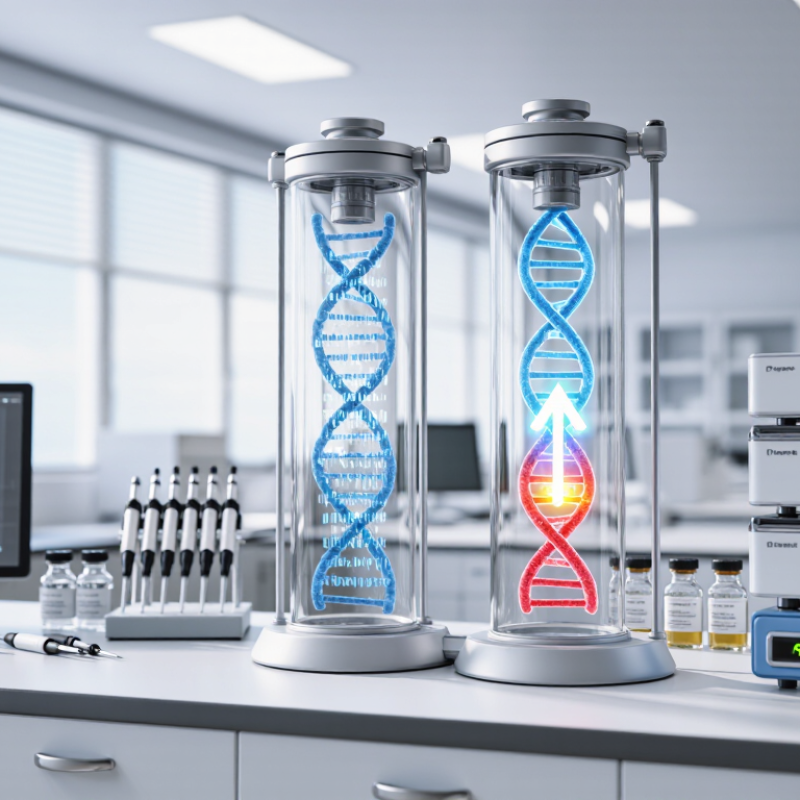
PCR makes many copies of a chosen DNA region. Researchers mix template DNA with primers, free nucleotides, and a heat-resistant enzyme. Primers act like bookmarks, marking where copying should begin and end. The sample moves through repeated temperature changes: heat separates DNA strands, cooling lets primers attach, and warming helps the enzyme build new strands. Each cycle can roughly double the target DNA, though real results depend on sample quality and reaction conditions. The process is precise, but not magic.
RT-PCR adds a reverse-transcription step when the starting material is RNA. An enzyme first converts RNA into complementary DNA, which PCR can then amplify. This is useful for studying RNA, including gene activity or RNA viruses. The abbreviation can be confusing: RT-PCR usually means reverse-transcription PCR, while real-time PCR tracks amplification as it happens. They are related, but not identical techniques.
Tips: Use clean, well-labeled tubes and include suitable controls. A no-template control can help reveal contamination. Keep in mind that a strong signal does not automatically prove a sample was collected or handled correctly. Real samples can be messy, and that detail deserves attention.
How RT-PCR Converts RNA into DNA Before Amplification
PCR and RT-PCR differ in the material they can amplify. Standard PCR copies a DNA target through repeated heating and cooling cycles. RT-PCR adds a step for samples that contain RNA. An enzyme called reverse transcriptase makes complementary DNA, or cDNA, from the RNA first.
That conversion matters because PCR enzymes amplify DNA, not RNA. In the lab, RNA is mixed with reverse transcriptase and suitable primers, then held at a controlled temperature while cDNA is produced. The cDNA can then be amplified and measured or detected. One detail worth checking: RT-PCR usually means reverse-transcription PCR, while real-time PCR describes monitoring amplification as it happens. The terms are sometimes confused.
Tips: Keep RNA samples cold and handle them carefully; RNA can break down easily. Use controls to check for contamination and confirm that the reverse-transcription step worked. Record the sample type and reaction conditions, too. Small choices matter. A rushed setup may produce a result, but it can make that result harder to trust.
Differences in Templates, Enzymes, and Procedures
Conventional PCR starts with DNA. A DNA polymerase copies a selected region through repeated heating and cooling cycles. RT-PCR starts with RNA, such as RNA extracted from a swab or tissue sample. Reverse transcriptase first converts that RNA into complementary DNA, or cDNA; DNA polymerase then amplifies the cDNA. That extra conversion step matters. It also creates another point where poor RNA handling or incomplete conversion can affect the result. Here, RT-PCR means reverse-transcription PCR, not necessarily real-time PCR, which measures amplification as it happens.
The main differences are the template, enzyme, and workflow. PCR uses DNA and DNA polymerase; RT-PCR uses RNA initially, plus reverse transcriptase and DNA polymerase. In practice, the added enzyme and incubation step make RT-PCR more sensitive to setup details. A useful benchmark comes from the MIQE guidelines, published in Clinical Chemistry in 2009: their checklist contains 85 reporting items, including details on sample quality, reagents, and cycling conditions. That guidance reflects a practical truth: a result is hard to judge when the method is poorly documented. Even with careful technique, RNA can degrade before testing, so clean handling and suitable controls matter. The distinction sounds simple, but laboratory workflows can blur it.
How PCR and RT-PCR Results Are Detected
PCR and RT-PCR differ at the starting material.
Standard PCR amplifies DNA, while RT-PCR first converts RNA into complementary DNA, then amplifies it. How the result is detected depends on the assay design. In conventional PCR, technicians often separate amplified DNA by size using gel electrophoresis. A visible band beside a DNA ladder suggests a product of the expected size, but it does not reliably show how much starting material was present.
That distinction is easy to miss.
Real-time PCR tracks fluorescent signals during each amplification cycle.
The cycle threshold (Ct) indicates when the signal crosses a set level; under controlled conditions, a lower Ct generally means more target material was present initially. RT-PCR can also be read on a gel, while real-time RT-PCR measures fluorescence as RNA-derived DNA is amplified.
They are related, not interchangeable terms.
The MIQE guidelines recommend checking amplification efficiency; their commonly cited acceptable range is 90–110% (Bustin et al., Clinical Chemistry, 2009). Poor RNA quality or missing controls can still distort a result.
Tips:
Check whether the method uses a gel or real-time fluorescence, and whether the sample began as RNA. Compare Ct values only when controls and assay conditions are consistent.
A neat-looking curve is not proof by itself.
When to Use PCR or RT-PCR
What Is the Difference Between PCR and RT-PCR?
When to Use PCR or RT-PCR
Choose the method according to the genetic material you need to detect. PCR amplifies DNA directly, making it useful for DNA-based targets, such as specific genes or DNA pathogens. RT-PCR first uses reverse transcriptase to convert RNA into complementary DNA, then amplifies that DNA. It is commonly used to detect RNA viruses or measure gene expression. One naming snag: RT-PCR means reverse-transcription PCR here; real-time PCR is often called qPCR and describes how amplification is monitored.
For respiratory-virus testing, RT-PCR is appropriate when the target is viral RNA. CDC influenza testing guidance reports molecular assays can have 90–100% sensitivity and about 99% specificity, depending on the assay and specimen. Those figures are not a guarantee for every sample. Poor collection or delayed transport can still affect results. For a DNA target, standard PCR may be the simpler fit.
Tips: Confirm the target molecule, sample type, and assay instructions before testing. Keep RNA specimens properly handled; RNA can degrade. The distinction sounds neat on paper, but workflow details matter.
What Is the Difference Between PCR and RT-PCR? — When to Use PCR or RT-PCR
| Comparison |
PCR |
RT-PCR (Reverse Transcription PCR) |
| What the name means |
Polymerase chain reaction: a method for amplifying a selected DNA sequence. |
Reverse transcription PCR: RNA is first converted into complementary DNA (cDNA), which is then amplified by PCR. |
| Starting material |
DNA, such as genomic DNA, plasmid DNA, or previously prepared cDNA. |
RNA, such as messenger RNA or viral RNA. The RNA is converted to cDNA before amplification. |
| Key enzyme(s) |
A thermostable DNA polymerase copies the target DNA. |
A reverse transcriptase makes cDNA from RNA, followed by a DNA polymerase for amplification. |
| Main workflow |
DNA is repeatedly denatured, primers bind to the target, and the target is extended to make new DNA copies. |
RNA is reverse-transcribed into cDNA; the cDNA then goes through PCR amplification cycles. |
| Typical result |
Usually indicates whether a DNA target was amplified; standard PCR products are often assessed at the end of the reaction, for example by gel electrophoresis. |
Usually indicates whether an RNA target was present and successfully converted and amplified. Standard RT-PCR is not automatically quantitative. |
| Common uses |
Detecting or amplifying DNA sequences, genotyping, checking DNA constructs, and preparing DNA for downstream analysis. |
Detecting RNA targets, studying gene expression, and testing for pathogens whose genetic material is RNA. |
| When to choose it |
Choose PCR when the target of interest is DNA. |
Choose RT-PCR when the target of interest is RNA and must first be converted to cDNA. |
| Important terminology |
PCR alone does not include a reverse-transcription step. |
RT-PCR here means reverse transcription PCR. It is different from real-time PCR; real-time RT-PCR monitors amplification during cycling and is often used for RNA quantification. |
| Controls to consider |
A positive control and a no-template control help assess amplification performance and contamination. |
Consider a positive control, a no-template control, and a no-reverse-transcriptase control to check for contamination from DNA. |
Note: “RT-PCR” can be used ambiguously. In this table it means reverse transcription PCR, not real-time PCR.