Choosing the best molecular pcr system in 2026 is not simply a matter of comparing speed or price. A busy diagnostic laboratory may need automated workflows and dependable service. A research team may value flexible protocols, precise temperature control, or multiplex capacity. The right choice depends on the work being done.
PCR pioneer Kary Mullis described PCR as “a way of making a lot of copies of a particular DNA sequence.” That basic purpose still guides instrument selection. A real-time PCR system monitors amplification as it happens. Digital PCR partitions samples for absolute quantification. Conventional thermal cyclers remain useful for routine amplification. Each approach answers different questions; none is automatically best.
Look beyond the product brochure. Consider validated assays, sample throughput, software usability, maintenance needs, and the cost of consumables. Ask how the system performs with your actual sample types, not only ideal controls. Check the available evidence, including independent evaluations where possible. A polished interface helps, but it cannot rescue a poorly matched workflow.
Small details matter. Think of a crowded bench, a rushed handoff, or a result that needs review. No instrument is perfect. Even a strong system may require training, careful quality control, and workflow changes. That caveat matters. This guide compares practical features and limitations, helping readers judge which molecular pcr platform fits their laboratory’s needs in 2026.
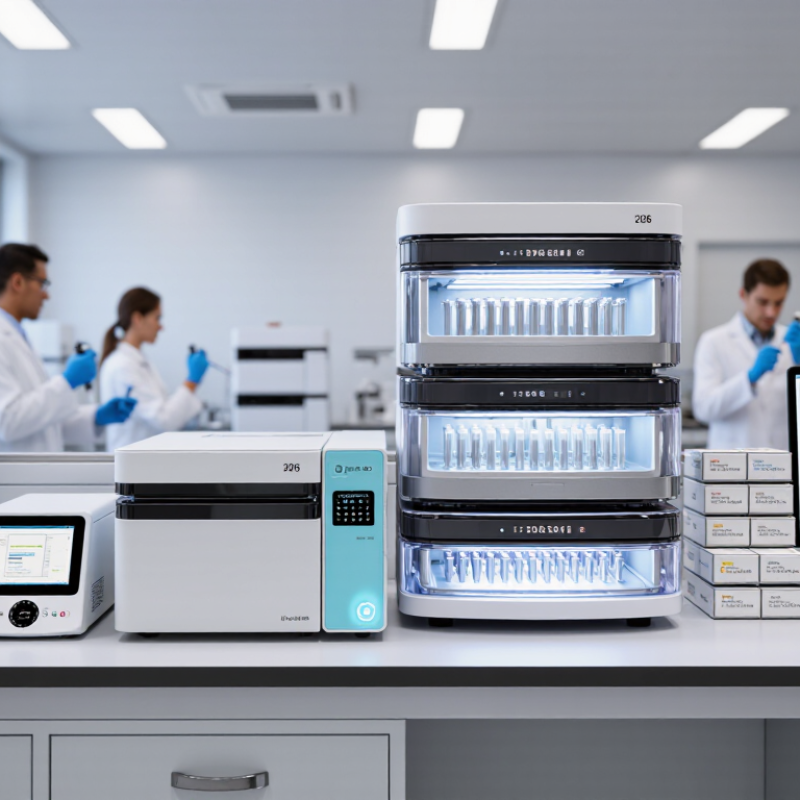
A molecular PCR system is a laboratory setup that detects selected genetic material in a sample. It typically combines a thermal cycler, reaction tubes or plates, optical sensors, and analysis software. Before testing, staff prepare the sample and mix it with primers, nucleotides, and enzymes. The primers guide the reaction toward a specific DNA sequence.
During each cycle, heat separates DNA strands, then cooling allows primers to bind. An enzyme copies the target region. Repeating these steps creates many copies, making a small amount of genetic material easier to detect. In real-time PCR, fluorescent signals rise as copies accumulate. The instrument records those signals, and software compares them with controls to help interpret the result.
Small details matter.
A reliable result depends on more than the instrument. Sample quality, careful pipetting, suitable controls, and contamination prevention all shape performance. A positive signal does not automatically explain the cause or clinical meaning; interpretation depends on the assay and the testing context.
Not magic.
Even well-run systems can produce unclear results, especially when the target is scarce or the sample contains substances that interfere with amplification. For 2026, a useful system is one whose workflow, detection method, and reporting fit the laboratory’s needs, with performance verified for its intended use. One imperfect part remains: results are only as dependable as the process around them.
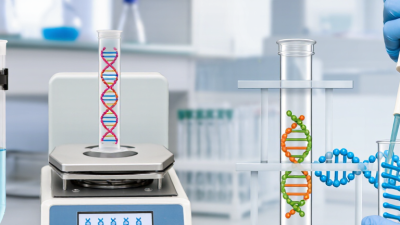
A molecular PCR system is more than a thermal cycler. It combines sample preparation, nucleic acid extraction, amplification reagents, primers, detection hardware, and analysis software. Each part can affect the result. A clean extraction matters: leftover inhibitors may weaken amplification, even when the instrument runs correctly.
The main PCR technologies serve different needs. Conventional PCR shows amplified DNA at the end of a run, often through gel-based detection. Real-time PCR tracks fluorescence during each cycle, supporting quicker measurement and comparison. Digital PCR partitions a sample into many small reactions, which can help quantify low target levels. None is best for every task. Sample type, target abundance, throughput, and required sensitivity should guide the choice.
Controls are essential. Positive controls check that the assay can detect its target; negative controls can reveal contamination. A system should also offer suitable calibration, clear result review, and documented performance with the intended assay. In practice, workflow details matter: tube format, pipetting steps, run time, and maintenance can shape daily reliability. One point is easy to underestimate. Software cannot repair a poorly designed assay, and a well-designed assay still needs validation on relevant samples. Real laboratories are messy, so the neatest specification sheet may not predict the smoothest workflow.
Evaluating a molecular PCR system in 2026 starts with the intended workflow, not a feature list. A small clinic may need a compact footprint, while a reference lab may prioritize parallel runs and flexible batch sizes. Ask how many samples fit per run, how long preparation and amplification take, and whether results arrive before the next shift. Minutes matter. Advertised run times may exclude preparation, repeat testing, and instrument downtime.
Review the limit of detection, inclusivity, cross-reactivity, and invalid-result rates for the specimen types your lab handles. Request validation data rather than relying on a headline sensitivity figure. Check whether internal controls can flag inhibition or extraction failure. Sealed reaction paths, clear contamination controls, and practical cleaning steps also matter. These safeguards are easy to overlook.
Assess usability, data export, cybersecurity, service response, consumable supply, and cost per reportable result. Watch an operator load samples and resolve an error; polished demonstrations may hide awkward steps. Training needs and staffing pressure deserve honest attention. A system that performs well but strains a team may not fit its workflow. Local verification remains essential, since results can vary with specimen quality, procedures, and operator habits.
A molecular PCR system should be judged by dependable results, not its fastest advertised run. CLSI’s EP05-A3 precision protocol evaluates repeatability over 20 days, with two runs daily and two replicates per run. That is a useful reminder: a single successful shift cannot show whether results stay consistent across operators, reagent lots, and routine workloads. Ask laboratories for reproducibility data near their real decision thresholds, not only headline sensitivity figures.
Workflow can matter as much as analytical performance. The MIQE guidelines, published in Clinical Chemistry, call for reporting items such as amplification efficiency, assay specificity, and controls. These details help buyers assess whether a system’s results are interpretable and comparable. Map the full path: specimen loading, hands-on minutes, batch size, invalid-result rate, and time to a reportable result. Small delays add up. A compact instrument may fit a crowded bench, but limited capacity can create queues during morning specimen peaks.
Cost comparisons need equal care. The CMS 2025 Clinical Laboratory Fee Schedule lists payment amounts for covered laboratory services, but reimbursement is not the same as operating cost. Include cartridges or reagents, controls, service contracts, staff time, repeat tests, and downtime in a cost-per-reportable-result estimate. Then compare systems using the same specimen mix and workload. Local data may be imperfect; label assumptions plainly, and revisit them after several months of use.
What Is the Best Molecular PCR System in 2026?
Choosing a System for Specific Laboratory Needs
The best PCR system is the one that fits a laboratory’s actual samples, staffing, and daily testing volume. WHO’s Global Tuberculosis Report 2024 recorded 8.2 million people newly diagnosed with tuberculosis in 2023, the highest number reported since global monitoring began. That scale highlights why laboratories should assess throughput and turnaround time alongside analytical performance. Check whether the workflow supports the specimen types you process, including the preparation and extraction steps before amplification. Confirm that the instrument’s controls, detection limits, and contamination safeguards suit your intended use. A fast run is not useful if preparation creates a bottleneck.
Tips: Map one typical sample from receipt to result. Time each step, note hands-on minutes, and ask staff to test the workflow during peak hours. Review service support, consumable availability, data export, and compatibility with your laboratory information system before purchasing. Verify performance claims against independent evaluations and your own validation data. This is easy to underestimate.
A small caveat: the simplest workflow is not always the best fit. A compact system may suit a low-volume lab, while a central laboratory may prioritize batch capacity and automation. I would leave room for local realities, too; staffing patterns and specimen quality can change the equation. Use the WHO report as context, not as a substitute for a needs assessment.
| System type | How it works | Typical strengths | Key limitations | Best suited to | Selection considerations |
|---|---|---|---|---|---|
| Real-time quantitative PCR (qPCR) | Measures fluorescence during amplification to detect and quantify target nucleic acids. | Widely used; supports relative or standard-curve-based quantification; suitable for many routine detection workflows. | Quantification depends on assay design, controls, and calibration approach; inhibitors and poor sample quality can affect results. | Routine gene expression, pathogen detection, and targeted nucleic-acid quantification. | Check optical channels, multiplex compatibility, plate format, analysis software, and availability of validated assays. |
| Digital PCR (dPCR) | Partitions a sample into many individual reactions and estimates target concentration from positive and negative partitions using Poisson statistics. | Can provide absolute quantification without a standard curve; useful for low-abundance targets and precise copy-number measurements. | Partitioning and analysis add workflow steps; consumable costs and sample throughput may be less favorable for some routine high-volume testing. | Rare-target detection, copy-number analysis, and applications requiring precise nucleic-acid quantification. | Assess partition capacity, sample input, assay multiplexing, acceptable concentration range, and data-analysis requirements. |
| Conventional endpoint PCR | Amplifies target DNA through thermal cycling; products are typically assessed after the reaction, often by gel electrophoresis. | Straightforward and useful for presence-or-absence checks, cloning workflows, and basic amplification tasks. | Does not provide real-time quantification; post-amplification handling can increase contamination risk. | Teaching, research, genotyping, and workflows where quantitative results are not required. | Consider temperature control, block capacity, ramping needs, and whether downstream product analysis is available. |
| High-throughput qPCR workflow | Uses plate-based real-time PCR, often with liquid handling or automated data processing, to run many reactions in parallel. | Efficient for large sample sets and repeated panel testing; automation can improve consistency and reduce manual handling. | Requires careful plate setup, workflow validation, and management of batch effects; instruments and automation need adequate space and support. | Core facilities, screening programs, and laboratories processing many samples or targets. | Match plate capacity to daily demand; confirm automation compatibility, staffing, service support, and batch-control procedures. |
| Integrated cartridge PCR | Combines sample processing and PCR detection in a closed, single-use cartridge or similar integrated consumable. | Can reduce hands-on steps and post-amplification handling; useful when rapid, standardized testing is a priority. | Closed consumables may cost more per test; assay menus and customization options can be more limited than open workflows. | Decentralized testing, time-sensitive workflows, and settings with limited molecular-laboratory infrastructure. | Verify sample types, target coverage, result time, throughput, consumable supply, and local validation requirements. |
Practical takeaway: There is no single best PCR system for every laboratory. Choose qPCR for versatile routine quantification, dPCR when precise absolute measurement is important, endpoint PCR for basic amplification, high-throughput qPCR for large batches, and integrated cartridge PCR when a simplified, closed workflow is the priority. Confirm performance for the intended sample type and assay before purchase.
Visit the official SA government portal www.sacoronavirus.co.za to stay informed about latest COVID-19 updates. Dismiss