Skip to content

Best RT Quantitative PCR Systems in 2026 for Buyers

In 2026, selecting an RT quantitative PCR system means matching instrument capabilities to real laboratory needs. The best choice is not always the newest or most expensive model. It should support the assays, sample volumes, and reporting requirements your team handles every week. That matters.

When comparing rt quantitative pcr platforms, buyers should examine sensitivity, dynamic range, multiplex capacity, and consistency across runs. Request performance data for relevant assays, and check how those results were generated. A specification sheet alone cannot show how easily staff can set up a plate, review amplification curves, or investigate an unexpected result. Small workflow details count: clear software, accessible service support, and dependable access to compatible consumables can save time after installation.

Throughput deserves careful thought. A compact instrument may suit a focused testing program, while a higher-capacity system may better serve a busy laboratory. However, unused wells do not create value by themselves. Consider installation requirements, training, maintenance schedules, data export, and the cost of routine consumables alongside the purchase price. Compare total operating costs over a realistic period, not just the initial quote.

No single comparison can settle every purchase. Results depend on assay design, sample quality, operator practice, and local validation. A careful shortlist should therefore include demonstrations, reference checks, and a review of the laboratory’s existing workflow. It is easy to overlook the people using the system daily. Their feedback may change the ranking. That is worth admitting.
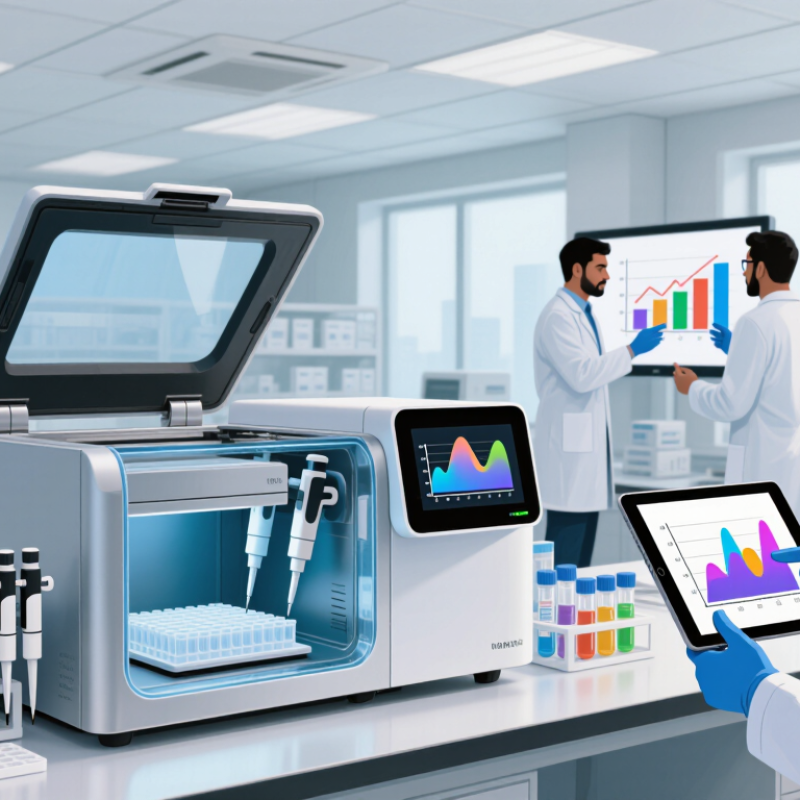
Best RT Quantitative PCR Systems in 2026 for Buyers

Understanding RT-qPCR Systems and Their Role in Molecular Testing

RT-qPCR systems combine reverse transcription with real-time polymerase chain reaction. Reverse transcription converts RNA into complementary DNA, which the instrument then amplifies. Fluorescent signals track that amplification during each cycle. This makes the method useful for measuring gene expression and detecting selected RNA targets in properly validated assays. Small details matter.

A complete system includes an instrument, compatible reaction consumables, analysis software, and a documented workflow. Some platforms process a few samples at a time; others support larger batches. Buyers should compare sample capacity, run time, temperature uniformity, optical channels, and data export options. Ask how the system handles controls, failed runs, and result review. A clear audit trail can help laboratories investigate unexpected findings.

The instrument alone does not ensure reliable results. Sample quality, assay design, operator training, and contamination control all affect performance. For example, a weak RNA sample may produce inconsistent amplification even on a well-maintained system. Request evidence from relevant sample types, and check whether local staff can service the equipment. Not every lab agrees on the ideal balance between throughput and flexibility. That choice deserves reflection: a rarely used feature may add cost without improving routine testing.

How RT-qPCR Instruments and Assays Work Together

Best RT Quantitative PCR Systems in 2026 for Buyers

How RT-qPCR Instruments and Assays Work Together

An RT-qPCR result depends on the full workflow, not just the instrument. Reverse transcription converts RNA into complementary DNA; PCR then amplifies selected targets while the instrument tracks fluorescent signals across cycles. A one-step assay keeps both reactions in one tube, reducing transfers. A two-step workflow separates them, which can make one cDNA sample useful for several targets. Convenient, but not automatically better.

The instrument must control temperature evenly and detect the assay’s fluorescent channels reliably. The assay must match the sample, target, and instrument optics. For example, a poorly designed primer pair can produce weak or nonspecific signals even on a precise system. The MIQE guidelines by Bustin and colleagues list 85 reporting items for qPCR studies, emphasizing details such as primer sequences, controls, and amplification efficiency. In routine validation, laboratories often look for 90–110% efficiency and a standard-curve R² of at least 0.99; these are useful checks, not guarantees. ISO 20395:2019 also sets requirements for evaluating quantitative PCR methods.

For buyers, compare systems using the assays and sample types you actually expect to run. Check whether the instrument supports the required dye channels, reaction volumes, and temperature protocol. Then test repeatability with replicate samples and positive and negative controls. A low-cost instrument may fit a small workflow, but service access and calibration time matter too. I would not assume a glossy specification sheet predicts messy real samples.

Best RT Quantitative PCR Systems in 2026 for Buyers — How RT-qPCR Instruments and Assays Work Together
Buyer Dimension Common Options How the Instrument and Assay Work Together What to Check Before Buying
Reverse-transcription workflow One-step RT-qPCR or two-step RT-qPCR One-step reactions perform reverse transcription and PCR in the same tube. Two-step workflows make cDNA separately, which can then be used in multiple PCR assays. Choose one-step for fewer transfers and a streamlined workflow; consider two-step when cDNA needs to be stored or tested across multiple targets. Confirm that the selected reagents support the intended workflow.
Reaction block and plate format Common formats include 96-well and 384-well plates; some instruments also accept tube strips or individual tubes. The thermal block heats and cools the reactions, while the assay mix is optimized for the reaction volume and vessel format. Match the instrument block to the lab’s routine plate or tube format. Verify supported consumables, reaction volumes, sealing method, and availability of compatible plates.
Throughput and run capacity Lower-throughput setups for smaller batches; higher-density plate formats for more reactions per run. Each sample-target combination occupies a reaction well unless a validated multiplex assay measures multiple targets in one well. Estimate reactions per run, including controls and replicates. Compare total daily capacity and hands-on workflow, not just the number of wells per plate.
Thermal cycling performance Standard cycling profiles or validated fast-cycling protocols The instrument executes the temperature steps required by the reverse-transcription and PCR reagents. Fast protocols are suitable only when the assay chemistry and cycling conditions have been validated for them. Check that the instrument’s temperature control and ramp settings support the assay protocol. Do not assume a shorter advertised run time will work with every assay.
Fluorescence detection Detection channels vary by instrument; systems may support one or several fluorescent reporters. The instrument measures fluorescence during amplification. The reporter dye or probe in the assay must fall within a compatible detection channel. Compare the instrument’s excitation and emission coverage with the dyes used in current and planned assays. Confirm whether channel combinations allow the intended multiplex panels.
Assay detection chemistry Intercalating-dye assays or sequence-specific probe assays Intercalating dyes report double-stranded DNA accumulation; probe assays generate a signal when a target-specific probe is cleaved or otherwise activated during amplification. Use appropriate specificity checks for dye-based assays, such as melt-curve analysis where supported. For probe assays, verify target sequence coverage, dye-channel fit, and assay validation data.
Multiplex capability Single-target reactions or multiple targets detected in the same well Multiplexing pairs distinguishable reporter signals with assays designed to amplify together. Optical separation alone does not guarantee that assays will perform well together. Check the number of usable detection channels and confirm that the complete assay combination has been tested for amplification efficiency, signal separation, and interference.
Reference normalization Endogenous reference targets, external controls, or both Reference targets help account for differences in sample input or processing when expression is compared. The instrument records their signals; the analysis method applies the normalization. Select reference targets appropriate to the sample and study. Validate their stability under the experimental conditions and confirm that the analysis software supports the chosen calculation.
Controls and contamination checks No-template controls, no-reverse-transcription controls, and positive controls as appropriate Controls help identify contamination, genomic-DNA contribution, or failed amplification. They use the same instrument and assay workflow as the samples. Plan control wells and replicates in the run layout. For RNA assays, consider DNase treatment and a no-reverse-transcription control when genomic DNA could affect interpretation.
Optical calibration and consumables Instrument-specific calibration procedures and compatible optical plates, tubes, caps, or seals Consistent optical readings depend on the instrument’s calibration and on vessels that transmit the measured fluorescence appropriately. Review calibration frequency, required service, consumable compatibility, sealing requirements, and whether the planned reaction format is supported.
Data analysis and reporting Instrument software, exportable raw data, and compatible analysis workflows The software converts fluorescence traces into quantification-cycle values and supports quality review. Relative-expression and standard-curve analyses require suitable experimental design and calculations. Check export formats, user access, audit or recordkeeping needs, threshold-setting options, and whether the software supports the lab’s analysis and reporting procedures.
Selection by laboratory need Routine gene-expression work, larger screening batches, or multiplex panels The best fit is the combination of instrument format, optical channels, validated assay chemistry, and workflow capacity—not the instrument alone. Before purchase, test representative samples and assays where possible. Compare reproducibility, usable throughput, training, maintenance, consumable supply, and total cost of ownership.

Key Performance Features Buyers Should Compare

When comparing RT quantitative PCR systems, look beyond advertised sample capacity. Check temperature uniformity, optical channel count, usable dynamic range, and detection limits across the full plate. A fast ramp rate saves time only if results remain consistent between wells. Ask for raw performance data, including replicate variation and low-copy detection results, rather than relying on a single headline figure. Small details matter.

The MIQE guidelines in Clinical Chemistry emphasize reporting assay design, controls, sample handling, and analysis methods—useful criteria when judging whether a system supports reproducible work.

Grand View Research’s 2024 real-time PCR market report projects 8.4% annual market growth through 2030; that expansion makes careful specification checks more important, not less. Compare instruments using your own sample types and target assays. A vendor’s test conditions may not match yours.

Also assess workflow fit: plate format, setup time, data export, service response, and software usability. Can staff review amplification curves without extra processing? Are failed wells easy to identify? These questions sound mundane. They often expose friction after installation. I would not treat one benchmark run as proof; repeat tests across operators and days, and document exceptions.

Evaluating System Types for Different Laboratory Workflows

Choosing an RT quantitative PCR system starts with the laboratory’s daily workflow, not its maximum sample capacity. A compact instrument may suit a team processing a few dozen samples per run. Larger 96- or 384-well systems can reduce run frequency when sample numbers rise. But a full plate is not automatically efficient if samples arrive sporadically.

One-step RT-qPCR combines reverse transcription and amplification in the same tube. It can simplify handling and reduce transfer steps, which helps when contamination control is a concern. Two-step workflows create complementary DNA separately, allowing one preparation to support multiple targets or repeat tests. That flexibility costs time and adds handling. The best choice depends on how often targets change and how samples are stored.

Optical channels matter for multiplex assays. Check that the system supports the fluorophores and controls your planned assays require, rather than relying only on a channel count. Also compare software exports, calibration needs, service access, and consumable availability. Small workflow details matter. A system may look ideal on a specification sheet yet slow work at the bench. Run a pilot with representative samples, including controls and difficult specimens. Even then, one pilot cannot reveal every bottleneck; staffing and sample timing deserve a second look.

Matching a 2026 RT-qPCR System to Your Budget and Needs

A suitable 2026 RT-qPCR system starts with the workflow, not the feature list. Check the workflow. How many samples run on a busy day? Will testing use one dye or several fluorescent targets? A compact block may suit a small lab with occasional batches. A higher-throughput instrument can reduce hands-on time when plates run daily. But extra channels and automation are useful only if your assays need them. Grand View Research’s PCR market report valued the broader global market at more than $10 billion in 2023 and forecasts further growth through 2030. That market includes more than RT-qPCR instruments, so treat it as context, not a direct price guide.

Compare the full cost of ownership. Include the instrument, installation, service, calibration, software, and assay consumables. Ask for a live demonstration using sample types and plate formats close to your own. Check whether results export cleanly into your analysis workflow.

For smaller budgets, a basic system may be the sensible choice if it meets validated assay requirements. Larger labs should weigh throughput against idle capacity and maintenance.

Not just the sticker price.

The MIQE guidelines emphasize transparent reporting of assay conditions and performance; buyers should also ask how the system supports consistent documentation. I would leave room for uncertainty: vendor specifications cannot predict every awkward sample or workflow bottleneck.