China Top 10 qPCR Machine Manufacturers for Global Buyers
Demand for qPCR instruments is shaped by clinical testing, research, food safety, and pharmaceutical quality control. PCR remains a substantial market. Fortune Business Insights estimated the global PCR market at about US$10.47 billion in 2023 and projected growth to US$19.23 billion by 2032. This broad estimate covers more than qPCR machines, so it should not be read as a device-only forecast. Still, it signals continued investment in PCR-based workflows.
For global buyers, choosing a manufacturer takes more than comparing instrument prices. A busy laboratory may need rapid cycling, dependable temperature uniformity, and software that produces clear, reviewable results. A smaller facility may care more about service access, training, and replacement parts. These practical details matter. They affect uptime.
This guide introduces ten qPCR machine manufacturers relevant to international purchasing decisions. It considers product range, application fit, support, and the information buyers should verify before requesting quotations. Specifications and service coverage can vary by model and region, so confirm them directly with the manufacturer or authorized supplier. Market forecasts also carry uncertainty; projected growth is not guaranteed demand. That caveat deserves attention. A polished brochure cannot replace a real evaluation using representative samples, routine workflows, and local service requirements.
Understanding qPCR Machines and Their Role in Molecular Testing
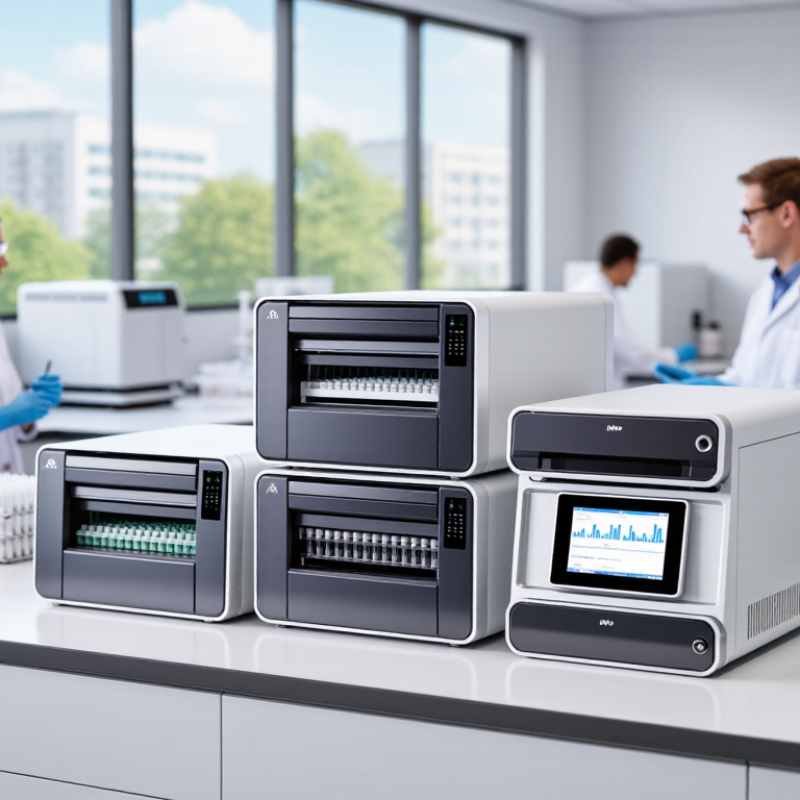
A qPCR machine measures DNA amplification as it happens. It repeatedly heats and cools samples while detecting fluorescent signals from each reaction. Unlike conventional PCR, which usually shows results only after amplification, qPCR tracks changes cycle by cycle. The resulting data can help estimate how much target genetic material was present in the starting sample.
Small details matter. Operators load prepared samples into a plate or tube block, check reaction volumes, and select a validated run protocol. Reference controls help reveal contamination, failed reactions, or inconsistent performance. Not every run is clean. A weak signal may reflect low target levels, sample quality, or setup errors, so instrument readings need careful interpretation rather than automatic trust.
In molecular testing, qPCR supports work such as pathogen detection, gene expression analysis, and research assays. The machine is only one part of that process: reagents, sample preparation, calibration, and staff training also affect results. For global buyers comparing equipment, practical questions include temperature uniformity, fluorescence channels, supported consumables, software reporting, and service access. A clear maintenance schedule and documented quality checks make daily use more dependable, though no instrument can correct a poorly designed assay.
| No. | Buyer Evaluation Dimension | Commonly Encountered Configurations | Why It Matters in Molecular Testing |
|---|---|---|---|
| 1 | Reaction Capacity | Common block formats include 48-, 96-, and 384-well plates; some systems use tubes or strip tubes. | Capacity affects sample throughput, reagent use, and compatibility with an existing laboratory workflow. |
| 2 | Optical Channels | Systems commonly offer several fluorescence channels; the number and supported dyes vary by instrument and configuration. | Channel availability determines which reporter dyes and multiplex assay designs can be used together. |
| 3 | Detection Chemistry | Common approaches include DNA-binding fluorescent dyes and sequence-specific hydrolysis probes. | Chemistry affects assay specificity, multiplexing options, and the controls needed for reliable interpretation. |
| 4 | Temperature Control | Thermoelectric (Peltier) systems are widely used; programmed cycling typically includes denaturation and annealing/extension steps. | Consistent temperature control supports repeatable amplification and helps reduce well-to-well variation. |
| 5 | Reaction Volume Compatibility | Assay volumes are protocol- and consumable-dependent; many workflows use volumes in the tens of microliters. | Confirm the validated volume range and compatible plates, seals, tubes, or strips before purchasing. |
| 6 | Multiplexing Support | Multiplex assays require compatible optical channels, distinguishable fluorophores, and validated assay conditions. | Multiplexing can test multiple targets in one reaction, but performance must be established for each assay combination. |
| 7 | Gradient Function | Available on some models; it applies different annealing temperatures across designated block positions. | A gradient can help optimize assay conditions, but it is not a standard feature on every qPCR system. |
| 8 | Data Analysis Software | Typical functions include amplification-curve review, threshold setting, standard-curve analysis, and relative quantification tools. | Clear analysis workflows and export options support consistent reporting and downstream data review. |
| 9 | Quality Control and Verification | Assessment commonly includes positive and negative controls, replicate testing, and documented instrument performance checks. | Routine controls help identify contamination, failed reactions, and potential instrument or assay issues. |
| 10 | Regulatory and Service Readiness | Documentation, intended-use status, installation, training, service coverage, and spare-part availability vary by product and market. | Buyers should verify local regulatory requirements and obtain written confirmation of support and service arrangements. |
| Note: This is a manufacturer-neutral buyer comparison framework, not a ranked list of companies or a specification for any single qPCR instrument. Actual capabilities vary by model, assay, consumables, and market. | |||
Related Posts
-
Who Are the Top qPCR and PCR Manufacturers in China?
-
Why is qPCR Important for Modern Biological Research?
-

Top QPCR Probe Types for Accurate Genetic Analysis?
-

2026 Best qPCR Probe Options for Accurate Gene Expression Analysis?
-
Discover the Best One Step qPCR Solutions for Global Buyers?
-

Top 10 Differences Between PCR and qPCR Methods?