Skip to content

How to Choose COVID RT PCR Test Kits for Global Buyers?

Choosing the right covid rt pcr test kit is a procurement decision with clinical, regulatory, and logistical consequences. Global buyers must look beyond attractive prices and impressive detection claims. A kit may perform well in a controlled laboratory, yet struggle in a busy clinic with limited refrigeration, inconsistent electricity, or inexperienced technicians.

WHO Director-General Dr. Tedros Adhanom Ghebreyesus emphasized the importance of testing: “Test, test, test. Test every suspected case.” His statement remains highly relevant. Reliable testing begins with verified performance, not marketing language. Buyers should examine analytical sensitivity, specificity, limit of detection, sample compatibility, internal controls, and published validation data. Independent evaluations are especially valuable when comparing similar products.

Check the details.

A dependable supplier should provide clear instructions for use, lot traceability, stability data, and responsive technical support. Regulatory authorization must match the destination market, because approval in one country may not satisfy another country’s requirements. Buyers should also assess transport temperature, shelf life upon arrival, instrument compatibility, and replacement timelines.

Practical experience often reveals overlooked weaknesses. A kit requiring several manual transfer steps may increase contamination risk. A kit with simple workflows may reduce training pressure, but only if its results remain consistent. This balance deserves careful review.

No checklist is perfect. Some purchasing teams may overvalue low cost and underestimate service delays. Others may trust a certificate without studying the underlying evidence. A stronger decision combines laboratory expertise, local regulatory advice, supplier audits, and small-scale verification before large orders. This guide explains how global buyers can make that process more transparent, evidence-based, and suitable for real-world testing conditions.
How to Choose COVID RT PCR Test Kits for Global Buyers?

Define the Intended Use and Testing Requirements

Choosing a COVID RT-PCR kit starts with its intended use, not its advertised sensitivity. A hospital screening program may need rapid batch testing, while a diagnostic laboratory needs results linked to patient care. Surveillance projects may require broader variant coverage and consistent data reporting. Research use has different controls and documentation. Define the setting before comparing prices. Write down who will be tested, which specimen will be collected, and how quickly results are needed. Nasal swabs, nasopharyngeal swabs, and saliva can demand different collection procedures. Small differences matter.

An experienced buyer should map the full workflow. Check extraction needs, instrument compatibility, internal controls, positive controls, and invalid-result handling. Review the claimed limit of detection under realistic conditions, not only in ideal laboratory studies. Confirm storage temperatures, shelf life, transport conditions, and local import requirements.

A kit that needs continuous cold storage may fail during a long rural delivery. Ask for instructions, performance data, safety information, and quality certificates. Documents should be clear enough for a trained technician to follow without guessing. That standard is useful.

Global procurement also requires local verification. Confirm whether the product is authorized for the intended market and whether testing must occur in approved laboratories. Plan training, proficiency checks, waste management, and result reporting before ordering large volumes. I have seen teams focus on unit cost and overlook extraction labor, repeat tests, or rejected specimens. That mistake is expensive. Requirements can change as variants, guidance, and supply routes change. Recheck them with laboratory and regulatory staff. No checklist is perfect. A short pilot may reveal problems that a spreadsheet misses.

Check Regulatory Approvals and Quality Standards

For global buyers, regulatory approval should be the first screening point for a COVID RT-PCR kit. Verify authorization in every target market, not only the manufacturer’s home country. Check the approval number, intended use, specimen type, and authorized testing setting. A certificate can look reassuring, but it may hide important limitations. The instructions for use should clearly state the limit of detection, inclusivity, cross-reactivity, storage temperature, and result interpretation.

Quality evidence must support the paperwork. A 2022 Cochrane review reported molecular test sensitivity of about 95.2% and specificity of 98.9% in evaluated conditions. Performance still changes with sampling quality, infection timing, and laboratory procedures. Ask for independent validation data, lot-to-lot consistency records, and real-time stability results. ISO 13485 certification can indicate controlled manufacturing, while ISO 14971 supports risk-management practices. Neither certificate replaces product-specific verification.

Look for sealed reagents, readable lot numbers, expiry dates, and temperature indicators on delivery. Many laboratories also require positive, negative, and internal controls in every run. Review post-market complaint procedures and recall communication timelines before signing a contract. WHO guidance emphasizes reliable diagnostics, trained users, and quality-assured laboratory systems. That point is easy to overlook. No checklist is perfect, and approval documents may not reflect performance in a crowded laboratory. A small pilot evaluation can expose extraction problems, unclear instructions, or weak logistics before large-scale purchasing.

Compare Kit Performance, Accuracy, and Detection Limits

How to Choose COVID RT PCR Test Kits for Global Buyers?

Performance should be judged beyond a bold accuracy claim. Check sensitivity, specificity, and detection consistency across different sample types. A kit may perform well with fresh samples but weaken after transport delays. Review independent studies, not only supplier data. Look for clear validation methods, sample numbers, and confidence intervals. These details show whether results are dependable in real laboratories.

The limit of detection (LoD) is equally important. It indicates the smallest viral target level the assay can reliably detect. A lower LoD can support earlier detection, but it does not guarantee perfect clinical results. Compare LoD values using the same testing method and specimen type. Examine internal controls, invalid-result rates, PCR targets, and possible interference. My early comparisons sometimes focused too much on headline accuracy. That was not enough. Rechecking raw validation details often changed the ranking.

Tips: Ask for lot-to-lot performance data, stability records, and instructions for storage. Confirm compatibility with your instruments and local laboratory workflow. Check whether the kit has approval or authorization from the relevant health authority. Keep a small verification panel before routine purchasing. Include weak-positive samples. They reveal problems that strong samples can hide. No kit is perfect. Continuous review remains necessary.

How to Choose COVID RT-PCR Test Kits for Global Buyers: Comparison of Kit Performance, Accuracy, and Detection Limits
Evaluation Dimension Recommended Buyer Benchmark Why It Matters How to Verify Procurement Interpretation
Intended Use Qualitative detection of SARS-CoV-2 RNA in respiratory specimens using real-time reverse-transcription PCR. Confirms that the assay is designed for molecular diagnosis rather than antibody or antigen screening. Review the regulatory authorization, intended-use statement, target population, and specimen list. Select only kits authorized or registered for the destination market and intended clinical use.
Viral Gene Targets At least two independent SARS-CoV-2 target regions, preferably with a human or process control. Multi-target designs reduce the risk of false-negative results caused by mutations in one target region. Check the target genes, primer/probe sequences where disclosed, and the assay’s mutation-monitoring plan. Prefer two-target or multi-target assays for long-term international supply.
Limit of Detection (LoD) Preferably ≤500 copies/mL or an equivalently low concentration, with detection confirmed at least 95% of the time during LoD studies. A lower LoD improves detection of samples with low viral RNA concentrations, particularly near the end or beginning of infection. Request the concentration units, extraction volume, replicate number, positive-detection rate, and raw LoD study data. Do not compare LoD values directly unless the units, specimen matrix, extraction method, and reporting method are equivalent.
Clinical Sensitivity Target ≥95% versus an appropriate molecular reference method, with a defined confidence interval. Measures the ability to identify true positive clinical specimens. Review prospective or well-designed retrospective studies, sample numbers, viral-load distribution, and inclusion criteria. High sensitivity is especially important for screening, travel testing, and low-prevalence settings.
Clinical Specificity Target ≥98% against negative clinical specimens and relevant respiratory pathogens. High specificity reduces false-positive results, unnecessary isolation, and repeat testing. Check the negative-panel size, population, comparator method, and discordant-result resolution. Evaluate specificity together with prevalence because the positive predictive value changes with prevalence.
Positive Percent Agreement (PPA) Preferably ≥95% across the intended specimen types and clinically relevant viral-load range. PPA is commonly used when no absolute clinical gold standard exists. Confirm the comparator assay and ensure that low-positive specimens are included. A single overall PPA can be misleading if low-positive samples are excluded.
Negative Percent Agreement (NPA) Preferably ≥98% using representative negative clinical specimens. NPA indicates how consistently the kit reports negative results in samples without detectable infection. Review the number and composition of negative specimens and the handling of invalid results. Look for evidence from multiple sites or populations before making a global purchase.
Internal Process Control Human specimen-adequacy control, extraction control, or both; preferably included in every reaction. Detects poor sampling, extraction failure, reagent inhibition, and some instrument problems. Check the control type, control target, expected result, and invalid-result rules. Avoid kits that rely only on an external positive control and have no specimen or process control.
Specimen Compatibility At least one validated upper-respiratory specimen type, such as nasopharyngeal or anterior nasal swab, with clearly defined collection media. Performance can change substantially with specimen type, collection technique, and transport medium. Verify independent validation for every specimen type that will be used in the purchasing region. Do not assume that validation for one swab type applies automatically to saliva or another specimen matrix.
Cross-Reactivity No expected cross-reactivity with common respiratory viruses, bacteria, fungi, human genomic material, or seasonal coronaviruses included in the panel. Reduces false-positive results caused by organisms commonly present in respiratory samples. Review the analytical specificity panel, tested concentrations, and any in-silico exclusivity analysis. Require a written cross-reactivity and interference report for the exact assay configuration.
Interference Testing Testing should cover common nasal and respiratory interferents, including blood, mucus, saline, and relevant medications where applicable. Interfering substances can suppress amplification or produce invalid results. Check tested concentrations and whether interference was evaluated at or near the LoD. Prioritize kits validated with the collection media and patient population used locally.
Turnaround Time Approximately 2–4 hours from extracted RNA to result for standard laboratory workflows; total collection-to-result time depends on logistics. Shorter processing time improves clinical decision-making and reduces reporting delays. Separate extraction time, amplification time, hands-on time, batching delay, and reporting time. For high-throughput laboratories, hands-on time and batch capacity may matter more than amplification time alone.
Throughput and Multiplexing Documented capacity for the required daily volume, with at least two viral targets and controls in the reaction where feasible. Throughput affects cost per result, staffing requirements, and surge capacity. Request verified samples-per-run, runs-per-day, extraction capacity, and instrument compatibility. Choose the workflow based on peak demand rather than average demand only.
Sample and Reagent Stability Common laboratory practice is refrigerated storage at 2–8°C for short-term transport, often up to 72 hours when supported by validation; longer storage generally requires frozen conditions according to the instructions for use. Temperature excursions and prolonged transport can reduce RNA recovery and increase invalid or false-negative results. Review real-time stability, freeze-thaw data, shipping temperature limits, and excursion acceptance criteria. Use the kit-specific stability claim; general cold-chain assumptions cannot replace validation.
Calibration and Quality Controls Clearly defined positive, negative, and process controls, with lot-release and acceptance criteria. Controls support batch validity, trend monitoring, and investigation of unexpected results. Review the certificate of analysis, control concentrations, control placement, and invalid-run procedure. Prefer suppliers able to provide lot-specific documentation and change-notification procedures.
Mutation and Variant Resilience Two or more conserved targets plus an ongoing in-silico surveillance process using current public sequence data. Primer or probe mismatches may reduce amplification efficiency or cause target dropout. Request the latest sequence-coverage analysis and the procedure for updating oligonucleotides. Include a contractual requirement for notification of material sequence-coverage risks.
Result Reporting Clear positive, negative, and invalid categories, with amplification-curve or Ct information available for laboratory review where appropriate. Transparent reporting supports quality assurance and follow-up testing. Review sample reports, instrument software, export formats, and laboratory information system compatibility. Prefer systems that preserve raw run data and audit trails.
Regulatory and Market Fit Documentation suitable for the destination country, including labeling, language, import requirements, and post-market support. Regulatory or customs gaps can delay deployment even when analytical performance is acceptable. Verify current registration status, shelf life at shipment, technical file availability, and local reporting obligations. Make regulatory documentation a pass/fail requirement before price comparison.
Total Cost per Reportable Result Calculate reagent cost plus extraction consumables, controls, labor, equipment, shipping, repeat tests, invalids, and waste. The lowest purchase price may not produce the lowest operational cost. Use a standardized cost model based on realistic batch size, invalid rate, and daily volume. Compare complete workflows rather than kit prices alone.
Important: The numerical values above are evidence-based procurement benchmarks and commonly used laboratory decision thresholds, not claims for any specific product. Final selection should be based on the kit’s current instructions for use, regulatory status, local verification data, and the exact specimen-to-result workflow.

Evaluate Sample Types, Storage, and Operational Needs

Choosing COVID RT-PCR test kits begins with the specimen, not the instrument. Nasopharyngeal swabs can support strong analytical performance, but collection requires trained staff and patient cooperation. Saliva and anterior nasal samples may simplify community screening, yet each matrix needs proper validation. A Cochrane diagnostic accuracy review reported molecular test sensitivity of about 95% and specificity near 99% in evaluated settings. Those figures are useful, but not promises.

Storage can quietly damage an otherwise capable workflow. CDC specimen guidance generally allows respiratory samples to remain at 2–8°C for up to 72 hours. Longer delays usually require freezing near –70°C. Repeated freeze–thaw cycles should be avoided. Buyers should check whether the kit includes compatible transport medium, validated swabs, internal controls, and clear rejection criteria. A broken cold chain is not a minor detail.

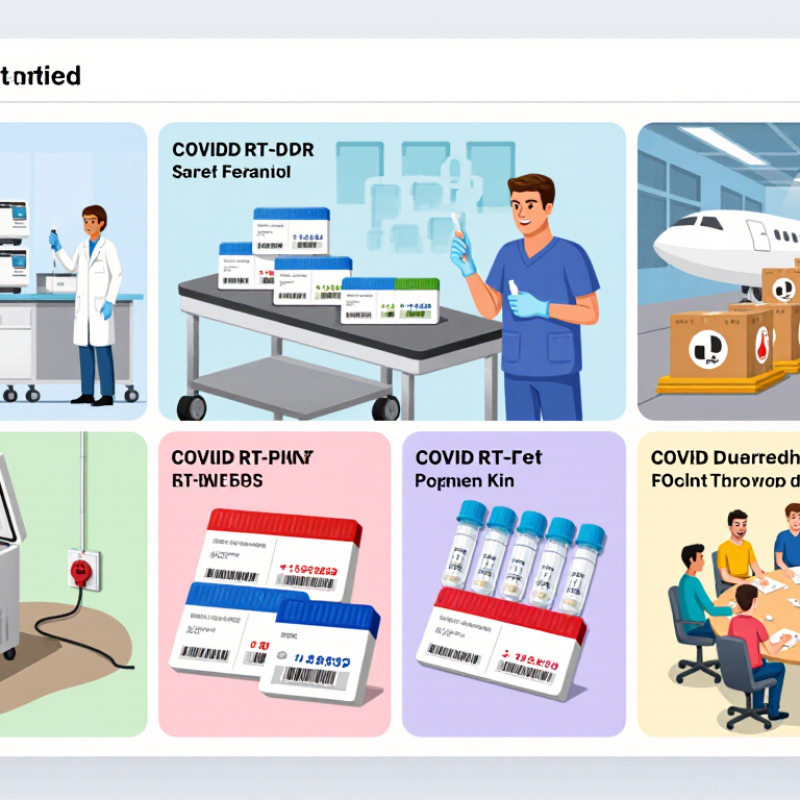
Operational fit matters every day. Compare extraction time, hands-on steps, batch size, invalid-result rates, and consumable availability. Check voltage requirements and backup power plans for smaller laboratories. The laboratory must also confirm whether local staff can perform calibration and contamination control. I would not select a kit from sensitivity claims alone. Real-world performance may fall when samples arrive late, weakly collected, or poorly labeled. WHO laboratory guidance and national public-health protocols should support the final validation, while local verification remains essential.

How to Choose COVID RT-PCR Test Kits for Global Buyers

Sample type, storage, and operational fit comparison

The index uses a 1–5 operational scale based on collection simplicity, routine cold-chain compatibility, and laboratory workflow compatibility. Nasal swabs and saliva can reduce collection burden, while nasopharyngeal specimens remain widely established for molecular respiratory testing. For respiratory specimens, public-health guidance commonly recommends refrigerated transport at 2–8°C for up to 72 hours; longer delays generally require freezing at approximately −70°C or below. Scores are procurement-planning benchmarks, not clinical sensitivity claims, and should be confirmed through local validation.

Reference framework: CDC guidance for handling and transporting respiratory specimens for molecular testing.

Assess Suppliers, Supply Chains, Pricing, and Support

Choosing COVID RT-PCR test kits requires more than comparing catalog prices. Global buyers should verify supplier experience, quality systems, and documented regulatory status in each destination market. Ask for recent certificates, validation data, lot-release records, and clear instructions for sample collection and storage. A reliable supplier answers technical questions promptly. Delayed replies can signal weak support after shipment. Request independent performance evidence, including analytical sensitivity, specificity, and invalid-result rates. Claims should match real laboratory conditions, not only ideal trials.

Supply chains deserve equal attention. Confirm raw-material sources, production capacity, backup facilities, and temperature-controlled shipping arrangements. Ask how the supplier handles customs documents, damaged cartons, and sudden demand changes. Small details matter. A shipment may arrive on time but still fail if reagents warmed during transit. Check shelf life at delivery and require batch traceability. Build a written communication plan with named contacts, escalation times, and replacement procedures. Yet, no plan removes every risk; forecasts can be wrong, especially during regional outbreaks.

Tips: Compare total landed cost, not the unit price. Include freight, duties, cold-chain fees, training, storage, and waste. Request tiered quotations with validity dates. Very low prices deserve careful review. Evaluate support through a practical trial: submit technical questions, request sample documents, and measure response quality. Consider local laboratory skills and equipment compatibility before purchasing. I would also review the contract twice; warranty wording and delivery assumptions are easy to overlook. Good decisions leave an audit trail.