What Is Organic Fertilizer?
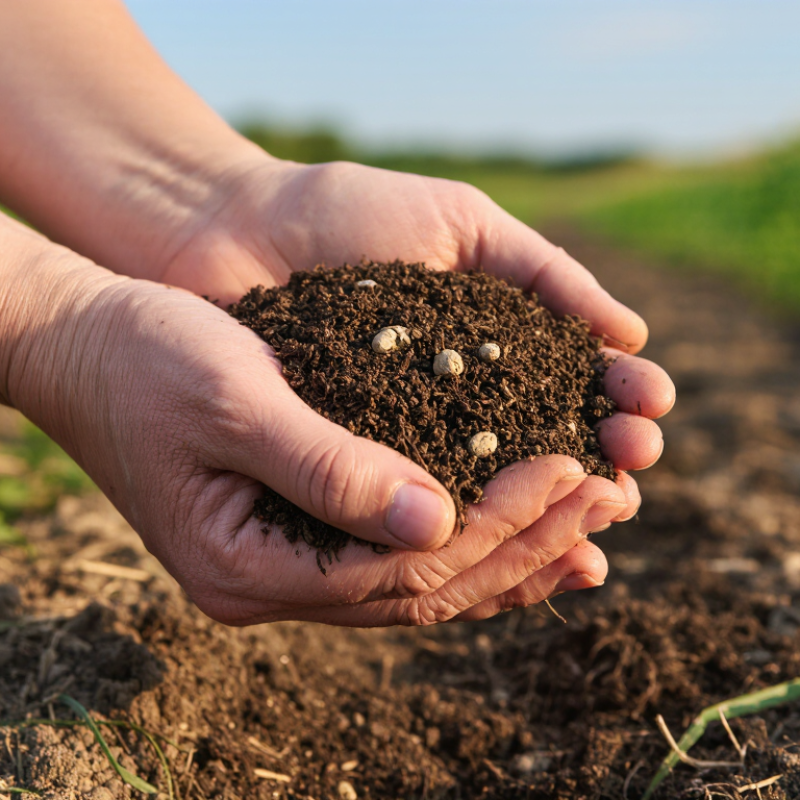
Organic Fertilizer is made from materials such as compost, animal manure, crop residues, and other plant or animal by-products. It supplies nutrients while adding organic matter to soil. A handful of mature compost feels crumbly and earthy; its exact nutrient content, however, cannot be judged by appearance alone. That matters.
The USDA’s 2021 Organic Survey counted 17,445 certified organic farms and reported $11.2 billion in sales. These figures describe U.S. organic agriculture, not fertilizer sales, but they show the scale of a sector where soil fertility is an everyday concern. The practical question is what a fertilizer contains and how quickly plants can use it. Many organic materials release nutrients gradually, as soil organisms break them down. Rates vary with the material, moisture, temperature, and handling. Slow release is not automatically better.
Agricultural scientist Sir Albert Howard wrote, “The health of soil, plant, animal and man is one and indivisible.” His words point to a wider view of fertility, but they are not a substitute for measurement. Soil tests and product labels help growers compare nutrient content and apply suitable amounts. Even then, results may be uneven. That limitation deserves attention, not a sales pitch. This guide explains what Organic Fertilizer is, where it comes from, and how its benefits and trade-offs depend on real soil and crop conditions.
Definition and Key Characteristics of Organic Fertilizer
What Is Organic Fertilizer?
Definition and Key Characteristics of Organic Fertilizer
Organic fertilizer is made from plant, animal, or other naturally derived materials. Examples include compost, manure, and plant meals. It supplies nutrients while adding organic matter to soil. Unlike many soluble fertilizers, its nutrients often become available as microbes break the material down. The pace varies. A cool, wet bed may release nutrients differently from a warm, well-aerated one.
Its nutrient content is not uniform. Feedstock, storage, and maturity all matter, so appearance alone cannot show how much nitrogen or phosphorus a handful contains. USDA NRCS nutrient-management guidance recommends accounting for nutrient sources and soil conditions when planning applications. Testing matters. A compost analysis can reveal nutrient levels and help avoid applying more than plants need.
The European Commission’s 2020 Farm to Fork Strategy set a 2030 target to reduce fertilizer use by at least 20% and nutrient losses by at least 50%. Those are policy targets, not proof that every organic input achieves them. Organic fertilizer can improve soil structure, but it is not automatically balanced, fast-acting, or harmless in excess. A simple mistake is assuming “natural” means “just add more.”
Common Sources and Types of Organic Fertilizer
What Is Organic Fertilizer?
Common Sources and Types of Organic Fertilizer
Organic fertilizers come from plant, animal, or naturally occurring mineral materials. Compost is a familiar source, made from decomposed leaves, food scraps, and other suitable organic matter. Its nutrient content varies with the ingredients and how fully they break down. Finished compost should smell earthy, not sour.
Animal-based options include aged manure, bone meal, and fish emulsion. Manure can add nutrients and organic matter, but fresh manure may damage plants or introduce unwanted microbes. Bone meal releases phosphorus slowly, while fish emulsion provides nutrients in a liquid form. Plant-based choices include alfalfa meal, seaweed meal, and seed meals. They differ in nutrient balance and release rate. Not an instant fix.
These materials are not interchangeable. A gardener might mix compost into a dry, crumbly bed, then use a measured meal fertilizer for a specific crop. Still, organic sources can be inconsistent; nutrient levels depend on processing and storage. Check the product’s analysis when available, and consider a soil test before adding large amounts. More fertilizer is not always better. Organic inputs can improve soil structure over time, but plants still need the right nutrients in usable amounts.
How Organic Fertilizers Are Produced
Organic fertilizer begins with chosen feedstocks: livestock manure, crop residues, food scraps, or plant-based meals. Producers inspect and sort them to remove plastic, stones, and other contaminants. The mix matters. Too much wet material can turn sour; too much dry straw slows decomposition. Water and air are adjusted, and piles are turned or mechanically aerated so microbes can break down organic matter.
Composting is controlled, not simply piled-up waste. The USDA Natural Resources Conservation Service’s Conservation Practice Standard 317 specifies, for certain composting systems, at least 131°F for three days in an aerated static pile or in-vessel system; windrows require 15 days at that temperature and at least five turns. This reduces pathogens, though temperature records alone do not prove a finished product is safe or nutrient-balanced. After active heating, the material cures for weeks or longer, then is screened and tested for nutrient content, moisture, and contaminants. Some producers blend in mineral or plant-derived ingredients to adjust nitrogen, phosphorus, and potassium. Results vary with feedstock and processing. A dark, crumbly texture can look ready, yet immature compost may still affect plant growth. Testing remains essential.
What Is Organic Fertilizer? How Organic Fertilizers Are Produced
Composting is one common way to produce organic fertilizer: microorganisms break down organic materials such as crop residues and manure. Temperature changes as the compost pile moves through different phases.
Temperature ranges are illustrative; actual piles vary with materials, moisture, aeration, and pile size. Finished compost is typically cured and screened before use.
Nutrient Release and Effects on Soil
Organic fertilizers contain nutrients in plant, animal, or mineral-derived materials. Unlike many soluble fertilizers, some nutrients must be decomposed by soil organisms before roots can use them. Release rates vary with material, moisture, temperature, and particle size. A cool, dry bed may show little change for weeks. Warm, damp soil usually supports faster microbial activity, though saturated soil can lack oxygen.
Not overnight.
As microbes break down compost or meals, nutrients become available gradually. Added organic matter can also improve soil structure and water retention over time. In loamy soil, that might mean fewer hard clods and a looser, crumbly texture, though results depend on the material and starting conditions.
Organic does not automatically mean balanced. Some products supply mostly nitrogen; others contribute more phosphorus or potassium, and nutrient levels can vary between batches. A soil test helps limit guesswork.
Visible plant response may be modest in the first season. It is easy to expect the soil to change faster than it does. Apply an appropriate amount, keep records, and watch plant growth alongside soil condition. Fertilizer alone cannot fix poor drainage or compaction.
Agricultural Uses, Benefits, and Limitations
What Is Organic Fertilizer?
Agricultural Uses, Benefits, and Limitations
Organic fertilizers include compost, animal manure, and plant-based meals. Growers apply them before planting, beside crop rows, or across orchards. They supply nutrients and add carbon-rich material to soil. For many materials, nutrient release is gradual. Not always.
Organic inputs can improve soil structure and help soils retain water, especially where organic matter is low. The FAO’s 2015 Status of the World’s Soil Resources report estimated that 33 percent of the world’s soils were moderately to highly degraded. Organic fertilizers may help, but they are not a quick fix. Nutrient levels vary with feedstock, storage, and maturity. USDA NRCS Nutrient Management Standard guidance recommends testing manure and compost before application. A bucket of fresh manure is no reliable fertilizer label. Poor timing can send nitrogen or phosphorus into waterways, while bulky materials can be costly to transport and spread. They may also fail to meet a crop’s immediate nutrient needs. In practice, rates should reflect soil tests, crop demand, weather, and material quality. “Natural” does not mean uniform.