What Types of Physiotherapy Tools and Equipment Are Used?
Physiotherapy Tools Equipment can range from simple measuring devices to advanced rehabilitation machines. The right choice depends on a person’s condition, goals, comfort, and stage of recovery. A tape measure, for example, can help track joint movement, while a gait belt may support safer walking practice. Small details matter.
This guide explores common categories used in clinics and rehabilitation settings. These may include assessment tools, resistance bands and weights, balance equipment, mobility aids, and hands-on treatment supplies. Some clinics also use devices such as stationary bikes, electrical stimulation units, or ultrasound equipment. Their suitability varies; a machine is not automatically helpful for every patient or problem.
Good physiotherapy practice starts with an assessment, not a shopping list. A qualified professional considers symptoms, movement, medical history, and the person’s response to treatment. Equipment should be maintained, correctly adjusted, and used with appropriate instruction. Even a familiar resistance band can cause discomfort if the exercise or resistance is poorly matched.
There is no single setup that fits every clinic. Not always. Space, budget, patient needs, and staff training all influence what is practical. More equipment does not necessarily mean better care, and some useful exercises require very little. The sections ahead explain what different tools are designed to do, where they may fit, and what to consider before using them. Choices deserve review. A tool can support rehabilitation, but clinical judgment and a patient’s feedback remain essential.
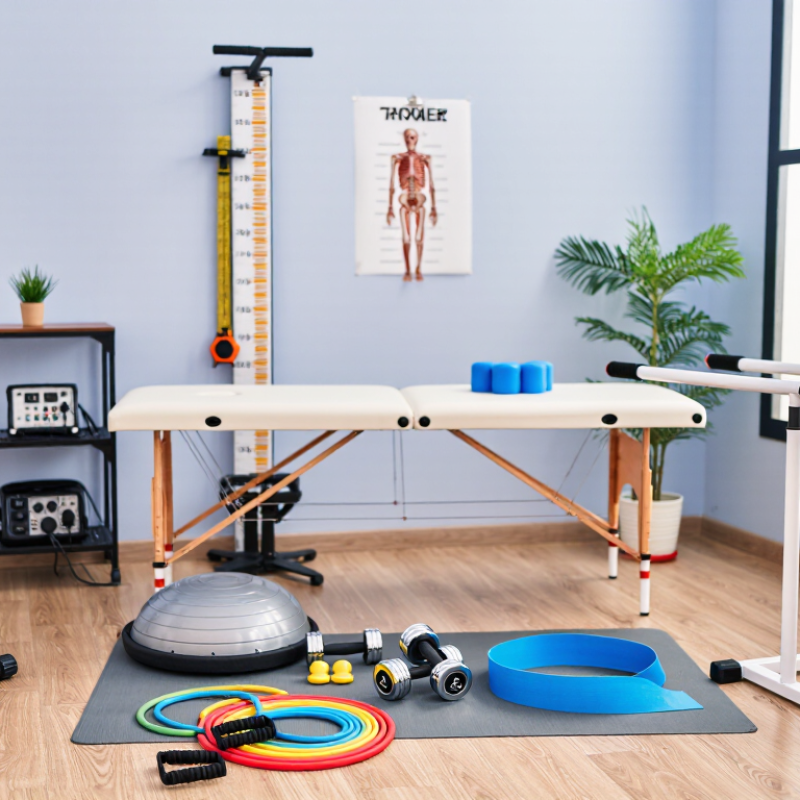
Core Categories of Physiotherapy Tools and Equipment
Physiotherapy tools fall into several practical categories. Assessment tools include goniometers, tape measures, and handheld strength gauges. They help clinicians track joint movement, limb size, and strength over time. Mobility and balance equipment includes walking aids, parallel bars, steps, and foam pads. Resistance bands, weights, and stationary cycles support strengthening and endurance. Treatment tables and positioning cushions help patients practise movements safely.
The World Health Organization’s 2023 rehabilitation fact sheet estimates that 2.4 billion people worldwide live with conditions that may benefit from rehabilitation. This broad need calls for adaptable equipment, not simply more equipment. A therapist might use a low step for controlled practice, then add a resistance band as strength improves. Heat, cold, or electrical stimulation devices may also be used when clinically appropriate. Their use depends on the person’s condition and treatment goals. A well-stocked room can still feel cluttered.
Tips: Check that equipment fits the patient, is stable, and can be cleaned easily. Record a simple baseline before exercise. Small details matter. Reassess regularly, and be willing to change the plan when progress stalls.
Assessment and Diagnostic Equipment
Assessment begins with observation, not a machine. A therapist may watch how someone rises from a chair, walks, or reaches overhead. A goniometer records joint range, while an inclinometer can measure spinal movement. Small differences matter. Measurements provide a baseline, but they cannot explain pain on their own.
Handheld dynamometers measure force during a controlled push or pull, helping compare sides and track changes over time. Grip meters add a quick strength measure. A tape measure can record limb circumference or swelling; therapists should use the same landmarks and position at each visit. Consistency is essential. Balance pads or pressure-sensitive platforms may show weight distribution and sway, though results depend on setup and attention. That detail is easy to overlook.
Some clinics use motion-capture cameras or timed walking tests to examine stride length, speed, and symmetry. Pulse oximeters and blood-pressure monitors can help track responses when exercise tolerance is a concern. These readings support clinical judgment; they are not standalone diagnoses. Equipment needs routine checks, clean contact surfaces, and a clear explanation for patients. Even precise-looking numbers may miss fear, fatigue, or a poor night’s sleep. Clinicians should record those details too, and sometimes question their first interpretation.
Therapeutic Modalities and Their Uses
Therapeutic modalities use physical energy to support pain relief, movement, or muscle activation. A therapist may apply a warm pack to a stiff shoulder, use cold after a swollen ankle, or select transcutaneous electrical nerve stimulation (TENS) for temporary pain modulation. Electrical muscle stimulation can help recruit weakened muscles. These tools are usually part of a wider plan, not stand-alone treatment.
The World Health Organization reported that 619 million people had low back pain in 2020, underscoring the scale of rehabilitation needs.
Evidence varies by modality and condition. A 2020 Cochrane review examined 10 therapeutic-ultrasound trials involving 1,025 people with chronic low back pain. It found low-certainty evidence and possible modest short-term pain relief. That is not proof of lasting recovery.
A soothing session can feel persuasive, but comfort alone does not show improved function; progress should also be checked through movement and daily tasks.
Tips: Ask what each modality is meant to change, and how progress will be measured. Tell your therapist if skin feels excessively hot, painful, or irritated. Pair passive treatments with appropriate movement practice when advised. Comfort matters. Reassessment matters, too.
Exercise and Mobility Training Equipment
Exercise and mobility training equipment makes movement practice measurable and repeatable. Common choices include resistance bands, light weights, stationary cycles, low steps, parallel bars, and balance pads. A therapist may use a band for seated knee extensions, then adjust resistance as control improves. For walking practice, parallel bars offer hand support while patients work on step length and balance. Simple equipment can be effective. The fit matters.
The World Health Organization’s 2024 Global Status Report on Physical Activity estimated that 31% of adults worldwide were insufficiently active in 2022. Its 2020 guidelines recommend that older adults include balance-focused, multicomponent activity on at least three days each week. In rehabilitation, this may mean combining supported standing, step-ups, and strength work rather than relying on one machine. Progress should reflect pain, fatigue, confidence, and the person’s daily goals.
A resistance band looks simple, but it can still be progressed too quickly. That is easy to miss. Therapists should check posture, breathing, and movement quality, then change resistance or repetitions gradually. Balance pads and unstable surfaces are not automatically better; some people need a firm floor and a rail first. Equipment should support safe practice, not replace skilled assessment or patient feedback.
How Physiotherapists Select and Apply Equipment
Physiotherapists select equipment after assessing a person’s goals, movement, symptoms, and confidence. A resistance band may help build strength, while a step or balance pad can support controlled movement practice. The choice should fit the task, not simply fill a treatment room. Clinicians also consider pain, fatigue, mobility, and any health factors that may affect safe use. Small details matter: band tension, chair height, and clear floor space can change how an exercise feels.
Tips: Start with a manageable setting and explain what sensations are expected. Ask the patient to report sharp pain, dizziness, or unusual discomfort. Check equipment condition, secure loose straps, and clean shared surfaces between users. Keep instructions short and demonstrate the movement before adding resistance.
During treatment, the physiotherapist watches posture, breathing, and movement quality, then adjusts the exercise as needed. A light band may be suitable at first; later, range or resistance can increase if movement stays controlled. Progress is not always steady. Sometimes a simpler exercise is the better choice that day. Equipment should support active participation, not replace careful observation or communication. Therapists can record changes in tolerance and function, while recognizing that one session rarely tells the whole story.