China Top DNA Stain Suppliers and Manufacturers?
China has become an important sourcing base for laboratory reagents, including dna stain products used in agarose gel electrophoresis. Market reports from MarketsandMarkets and Grand View Research show continued growth in the global life science reagents sector. Their estimates differ, partly because product categories and regional coverage are not identical. That detail matters when comparing suppliers.
This guide examines leading China dna stain suppliers and manufacturers through practical purchasing criteria. These include formulation consistency, detection sensitivity, packaging stability, and batch-to-batch documentation. A reliable supplier should provide a current Safety Data Sheet, Certificate of Analysis, technical specification, and clear storage instructions. It should also explain whether the product is designed for ultraviolet or blue-light visualization.
Small details matter.
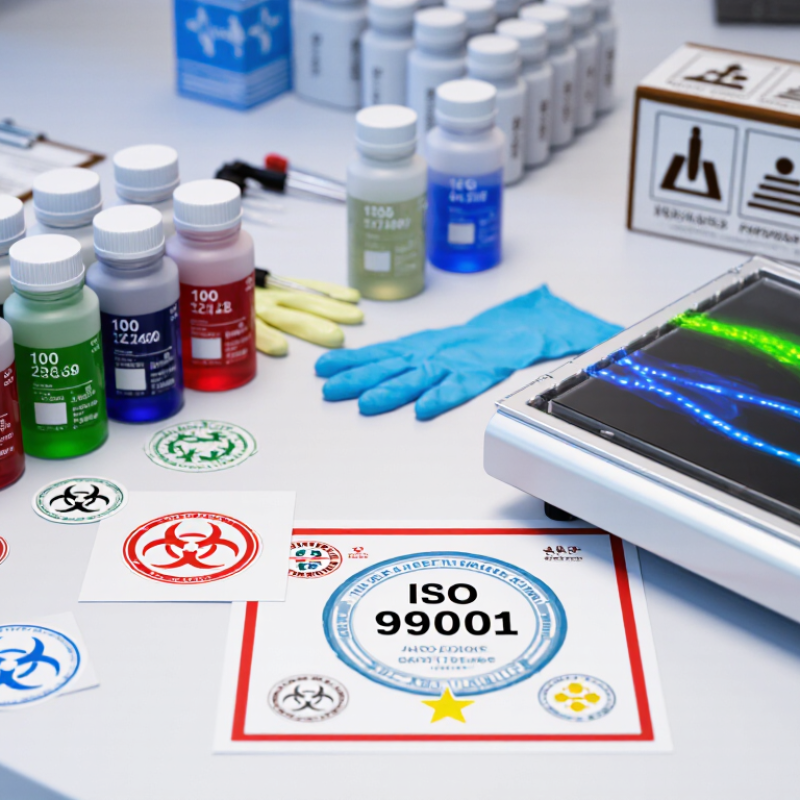
A 100 mL bottle, for example, should show a readable lot number, expiry date, concentration, and storage temperature. ISO 9001 certification can indicate controlled quality processes, although certification alone does not prove staining performance. Independent test data remains important. The WHO Laboratory Biosafety Manual also emphasizes documented procedures, risk assessment, and appropriate handling of laboratory chemicals.
Some Chinese manufacturers offer ethidium bromide alternatives, fluorescent gel stains, and OEM packaging. Buyers should verify compatibility with their existing imaging systems before placing large orders. Regulatory expectations also vary by destination, so export documents deserve careful review. Claims such as “non-toxic” should not be accepted without supporting evidence.
This comparison is not a perfect ranking. Supplier capabilities can change. Product names can look similar. Procurement teams should request samples, compare results across several gels, and confirm after-sales support before signing a long-term agreement.
What DNA Stains Are and How They Support Laboratory Analysis
What DNA Stains Are and How They Support Laboratory Analysis
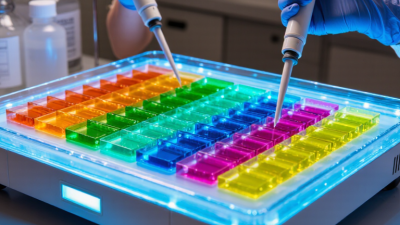
DNA stains make invisible genetic material visible after electrophoresis or imaging. They bind to DNA and produce color or fluorescence under suitable light. This allows analysts to inspect fragment size, concentration, and separation quality on a gel. Small bands matter.
Common stain choices include intercalating dyes and safer fluorescent alternatives. Their performance depends on sensitivity, background signal, photostability, and compatibility with imaging equipment. A 2023 Grand View Research report estimated the global genomics market at more than USD 30 billion, reflecting growing demand for dependable laboratory visualization tools. Yet market growth does not guarantee reliable results.
Experienced laboratory teams compare detection limits, staining time, buffer compatibility, and disposal requirements before purchasing. They also check supplier documentation, lot consistency, certificates of analysis, and technical support. The World Health Organization’s 2020 Laboratory Biosafety Manual emphasizes risk assessment, controlled handling, and suitable waste procedures for laboratory chemicals. These details can prevent blurred bands, false interpretation, and repeated experiments.
Results are not always perfect. Overstaining can hide closely spaced fragments, while weak staining may make small bands disappear. I have found that imaging settings sometimes matter as much as the stain itself. A careful workflow uses controls, clean vessels, calibrated equipment, and recorded exposure settings. Suppliers should provide clear validation data, storage instructions, and traceability rather than promising universal performance.
China Top DNA Stain Suppliers and Manufacturers: What DNA Stains Are and How They Support Laboratory Analysis
DNA stains are fluorescent or visible-light dyes used to reveal nucleic acids in agarose and polyacrylamide gels. The chart compares approximate peak emission wavelengths for commonly used DNA stains under typical laboratory conditions.
Interpretation: Emission wavelength affects the optical filter and light source required for gel documentation. Stains emitting near 520–530 nm are commonly detected with blue-light or green-sensitive imaging systems, while stains emitting near 590–610 nm require suitable orange-red detection settings. Actual performance depends on gel concentration, binding conditions, sample type, and instrument configuration.
Main Types of DNA Stain Suppliers and Manufacturers in China
China Top DNA Stain Suppliers and Manufacturers?
China’s DNA stain supply chain includes several distinct manufacturer types. Fluorescent intercalating dye producers serve routine agarose gel imaging and high-throughput laboratories. Silver-stain manufacturers target customers needing strong visual contrast without specialized imaging equipment. Safer, lower-toxicity formulations are also expanding in teaching and clinical laboratories. Some suppliers develop concentrated reagents, while others provide ready-to-use gels, buffers, and packaged kits.
A second group focuses on OEM and custom formulation services. These manufacturers may adjust staining sensitivity, storage stability, container size, or compatibility with existing electrophoresis systems. Distributors usually support smaller laboratories with technical documents, batch delivery, and local after-sales assistance.
According to Grand View Research, the global life-science reagents market is projected to grow at more than 7% annually through 2030. That growth supports wider sourcing options in China, but product quality still varies.
Practical buyers should request certificates of analysis, lot-specific performance data, and storage validation. Independent gel testing matters. A useful trial compares band visibility, background noise, staining time, and repeatability across three lots.
MarketsandMarkets reports continued expansion in the electrophoresis market, driven by molecular biology and research testing. Yet market growth does not guarantee consistency. Some product pages provide limited technical evidence, which deserves careful review.
The strongest suppliers explain formulation limits honestly, maintain traceable quality systems, and provide clear handling instructions. Small details matter.
Quality Standards for Evaluating Chinese DNA Stain Products
Chinese DNA stain suppliers should be assessed through documented quality, not catalog claims. ISO/IEC 17025:2017 requires competent testing laboratories, validated methods, and traceable measurement results. Ask for a batch-specific certificate of analysis. It should show concentration, purity, appearance, storage temperature, expiry date, and test methods. Generic certificates are weak evidence.
ISO 18385:2015 addresses contamination control for forensic DNA products. Even when a stain is used for research, suppliers should explain production controls, cleanroom practices, and packaging integrity. NIST’s 2023 forensic laboratory assessment also highlights validation, quality assurance, equipment reliability, and workforce limitations. These findings make independent verification important.
Test fluorescence intensity, background signal, staining consistency, and DNA recovery across several lots. Record the results.
Stability data matters. Request real-time and accelerated studies, not only a promised shelf life. Packaging should arrive sealed, clearly labeled, and temperature-monitored when required. A dependable supplier can provide technical support, deviation records, and replacement procedures. I would not accept “high sensitivity” without numerical comparison data. That phrase is too vague. One practical weakness remains: small laboratories may lack reference materials for full validation. An external accredited laboratory can reduce that gap, although it increases cost and time. Evaluate both.
How to Compare Product Performance, Safety, and Technical Support
Comparing DNA stain suppliers requires more than checking fluorescence claims. In routine gel work, I examine band brightness, background haze, detection limits, and signal stability. A sharp band against a clear gel is more useful than intense glow. A brighter stain is not always better. Excess signal can hide weak fragments and complicate image analysis.
Run matched tests with the same DNA ladder, gel percentage, buffer, staining time, and imaging settings. Record exposure time and dilution carefully. I also check compatibility with ultraviolet and blue-light systems. Some products perform well immediately but fade during repeated imaging. Others need longer staining, which can affect workflow. My early comparisons sometimes favored speed over clarity, and that was a poor judgment. Reproducibility matters more than one attractive image.
Safety documents should be easy to obtain and written clearly. Review hazard classifications, recommended gloves, eye protection, storage temperature, spill response, and waste instructions. Suppliers should provide batch-specific certificates, technical protocols, and realistic troubleshooting guidance. Responsive support is valuable when background increases or bands appear uneven. Ask whether specialists can review images and explain likely causes, rather than sending generic instructions. Reliable manufacturers also describe quality-control testing, shelf life, lot consistency, and shipping conditions. Vague answers deserve caution.
Choosing a Reliable Chinese DNA Stain Supplier for Your Laboratory
China Top DNA Stain Suppliers and Manufacturers?
Choosing a Reliable Chinese DNA Stain Supplier for Your Laboratory
Selecting a DNA stain supplier requires more than comparing prices. Your laboratory needs clear product specifications, consistent performance, and dependable communication. Ask for the stain’s chemical identity, concentration range, storage temperature, shelf life, and intended gel applications. A professional supplier should provide a current certificate of analysis and safety data sheet for every relevant product batch.
Quality control matters greatly. Check whether the manufacturer records raw material sources, batch numbers, test methods, and release results. You can also request sample testing before placing a larger order. Run the sample beside your established control and compare band visibility, background fluorescence, and staining time. Small differences can affect routine results. They are easy to overlook.
Look beyond the product itself. Reliable Chinese manufacturers usually explain packaging options, transport conditions, and replacement procedures clearly. Temperature-sensitive materials may need insulated shipping and documented delivery checks. Technical support should answer practical questions, not repeat general advertising language. Ask how complaints are investigated and how corrective actions are recorded.
Experience has taught many laboratory users to examine communication speed as well as technical documents. A polished certificate is useful, but it cannot replace stable results. I would also review independent customer feedback, although such feedback is not always complete. One overlooked detail can be the label design. Clear lot numbers and expiration dates save time during audits and daily testing.