Skip to content

How to Source Roxburgh Rose Extract in Bulk

Roxburgh Rose Extract is usually made from the fruit of Rosa roxburghii, a botanical valued for its distinctive composition. For bulk buyers, a low price is only one part of the decision. Correct species identification, fruit origin, extraction method, and batch consistency matter just as much. Small details count: a Latin name on the specification sheet, a clear assay method, and a sample that matches the production lot.

The market context is encouraging, but it needs careful interpretation. Grand View Research estimated the global botanical supplements market at USD 57.95 billion in 2022, with projected growth through 2030. That figure covers many botanicals; it is not a market-size estimate for Roxburgh Rose Extract. The World Health Organization’s 2019 global report also found that 170 of 194 member states reported traditional and complementary medicine use. These reports signal broad interest, not guaranteed demand for any single ingredient.

Quality starts with evidence. Mark Blumenthal, founder and executive director of the American Botanical Council, has long emphasized botanical identity and product quality. That principle is highly relevant here. I cannot verify a Roxburgh-specific quotation from him, so attributing one would be misleading. Ask prospective suppliers for the botanical name, plant part, country of origin, extraction ratio, standardization method, and recent batch tests. Review contaminant and microbiological results, then compare samples with the written specifications. A polished certificate is not proof by itself. Supplier claims still need scrutiny. Bulk sourcing works best when documentation, testing, and physical samples tell the same story.
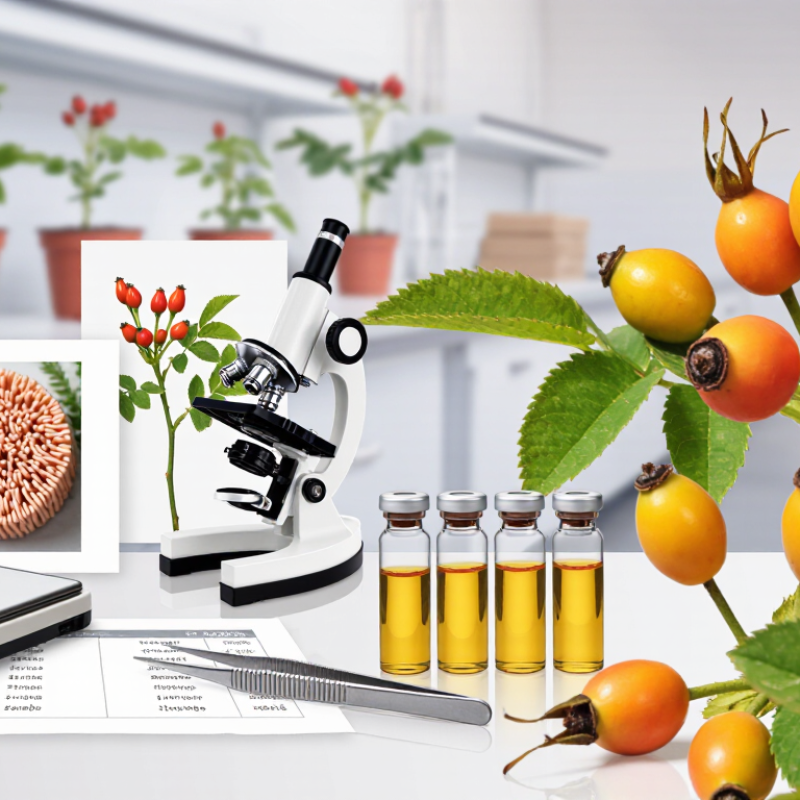
How to Source Roxburgh Rose Extract in Bulk

Identify Roxburgh Rose by Its Accepted Botanical Name, *Rosa roxburghii*

How to Source Roxburgh Rose Extract in Bulk

Identify Roxburgh Rose by Its Accepted Botanical Name, Rosa roxburghii

Start with the accepted name Rosa roxburghii Tratt., listed by Kew’s Plants of the World Online. Common names can vary between suppliers and regions. A label can still be wrong. Ask for the Latin name on the specification sheet, invoice, and certificate of analysis, then check that all three match. Confirm the plant part too: fruit, seed, and leaf extracts are not interchangeable. Small detail. Big difference.

For bulk quotes, request the extraction solvent, drug-to-extract ratio, carrier content, and batch-specific test results. The World Health Organization’s Quality Control Methods for Herbal Materials describes identity, purity, and contaminant checks; ask suppliers how their methods apply to this material. Review moisture, microbial limits, pesticide residues, and heavy metals against your own product specifications. A certificate alone is not proof of botanical identity. If identity matters to your formulation, request suitable orthogonal testing, such as chromatographic and microscopic checks. Grand View Research valued the global botanical extracts market at USD 6.8 billion in 2022 and projected 7.4% annual growth through 2030. That broad market figure is not a Roxburgh rose demand forecast. Treat it as context, not a purchasing signal. Bulk sourcing is less tidy than it looks; compare samples and documents before settling on a volume.

Set Extract Identity and Purity Criteria Using USP <561>

How to Source Roxburgh Rose Extract in Bulk

Set Extract Identity and Purity Criteria Using USP <561>

Bulk sourcing starts with a precise botanical identity. Specify Rosa roxburghii Tratt., the plant part, geographic origin, and extraction method. Common names can be ambiguous. Request authenticated raw-material records, representative samples, and a batch-specific certificate of analysis. USP <561> offers relevant procedures for evaluating botanical articles, but an extract may need additional, process-specific specifications.

Build identity criteria before comparing suppliers. For incoming botanical material, assess applicable USP <561> tests and document acceptance limits. For the finished extract, use a validated chromatographic fingerprint and suitable marker compounds where available. Define the expected profile, not just one headline marker. A certificate should identify the test method, result, units, and laboratory. A neat certificate can still leave gaps.

Purity checks should reflect the material and its processing history. Set risk-based limits for moisture, microbial quality, elemental impurities, pesticide residues, and residual solvents, using appropriate validated methods. Confirm that the sampling plan represents the bulk lot, not only a convenient surface sample. Keep retain samples for comparison. This is not always tidy. Natural variation can shift color and composition, so investigate unexpected changes rather than accepting a supplier’s explanation alone. Reassess specifications when the plant part, origin, or extraction conditions change.

Trace Raw Materials Against WHO GACP Guidelines

How to Source Roxburgh Rose Extract in Bulk

Trace Raw Materials Against WHO GACP Guidelines

Bulk sourcing Roxburgh rose extract starts with the plant, not the finished powder. Confirm the botanical identity as Rosa roxburghii, the plant part used, and whether material is cultivated or wild-collected. Ask for harvest location, date, and lot-specific records. These details help buyers trace each extract batch to its raw material.

The WHO Good Agricultural and Collection Practices guidelines provide a practical framework for documenting cultivation, collection, and post-harvest handling. They are guidance, not a product certificate. Check whether supplier records describe drying conditions, storage, and transport, then compare them with the extract’s identity and contaminant test results. Look for gaps between harvest and processing dates. A tidy spreadsheet is not proof; records should connect to actual lots.

The WHO Global Report on Traditional and Complementary Medicine 2019 found that 170 of 194 Member States reported using these practices. That figure signals broad activity, not demand or quality for this specific rose. Keep that distinction clear. Before agreeing to bulk volumes, review representative batch documents and ask how changes in origin or harvest season are managed. Small inconsistencies matter. Roxburgh rose sourcing can be traceable, yet field records may still be incomplete; buyers should document unresolved questions rather than assume a clean paper trail.

Qualify Bulk Suppliers Under ISO 22000:2018 Food Safety Systems

When sourcing Roxburgh Rose extract in bulk, treat ISO 22000:2018 certification as a starting point, not a guarantee. The system covers food safety management, hazard controls, communication, and continual improvement. Ask for the supplier’s current certificate, its site address, product scope, and certification body. Check that the scope covers extraction and packing, not merely an unrelated facility. Details matter.

ISO’s 2022 Survey of Certifications reported 36,918 valid ISO 22000 certificates across 112 countries. That scale shows broad adoption, but a certificate alone cannot confirm that a specific rose extract lot is suitable. Request a hazard analysis for the extract, including controls for incoming plant material, drying, extraction, and foreign matter. Review batch traceability records and a recent certificate of analysis. The figures should match the lot number on the shipment paperwork.

Test the supplier’s recall and complaint procedures with practical questions: How quickly can one lot be traced to its raw material source? Can the supplier provide monitoring records for critical controls? Ask for audit findings and evidence that corrective actions were closed. Where possible, compare documentation with a retained sample and agreed specifications for identity, moisture, and microbiological limits. Paperwork can look tidy. Real systems sometimes have gaps, so document them and agree on corrective steps before placing a large order.

How to Source Roxburgh Rose Extract in Bulk - Qualify Bulk Suppliers Under ISO 22000:2018 Food Safety Systems

Qualification Dimension What to Specify or Verify Evidence to Request
Botanical identity For fruit-derived material, specify Rosa roxburghii Tratt. and identify the plant part as fruit. Confirm the accepted botanical name, synonyms, and material description in the purchase specification. Approved raw-material specification; supplier identity and traceability records; botanical identification method or qualified identification report.
Extract definition Define the extraction solvent, native extract ratio or drug-extract ratio where applicable, carrier or processing aids, and whether the product is a liquid, powder, or standardized extract. Do not rely on a generic “rose extract” description. Technical data sheet, manufacturing flow summary, composition declaration, and signed product specification.
Food-use suitability Confirm that the ingredient and its processing aids are permitted for the intended food use in the destination market. Check applicable rules for ingredient status, permitted uses, labeling, and maximum levels. Regulatory status statement for the destination market; ingredient and processing-aid declarations; proposed label information.
ISO 22000:2018 certification Check that the certificate is current, covers the manufacturing site and relevant food-chain activities, and includes a scope appropriate to producing or processing the ingredient. ISO 22000 is a food safety management system standard, not a product-quality certificate. Certificate copy; certification-body details; certificate validity and scope verified with the issuing certification body or its official directory.
Food safety controls Review the supplier’s hazard analysis and controls for biological, chemical, and physical hazards, including control of raw materials, processing, foreign matter, sanitation, and rework where relevant. Food safety plan summary, hazard-control records, sanitation and pest-control procedures, and recent audit findings with corrective actions.
Batch specifications and testing Agree measurable limits for identity, appearance, moisture or other relevant physical properties, and any declared marker compounds. Set microbiological and chemical contaminant criteria according to applicable law, intended use, and the product risk assessment; there is no single universal limit for every extract. Signed specification; representative batch certificate of analysis (COA); test methods and laboratory details. Use a competent laboratory and methods suitable for the analytes.
Contaminant and adulteration controls Assess risks for pesticide residues, heavy metals, mycotoxins, residual solvents, and adulteration as relevant to the origin, process, and destination-market requirements. Confirm that any “standardized” or potency claim is supported by testing. Risk-based test results, residue or contaminant declarations, solvent statement where applicable, and supporting documentation for compositional claims.
Traceability and recall readiness Require lot-level traceability from incoming botanical material through processing and shipment. Establish a documented process for complaints, withdrawal, and recall, and agree how quickly affected lots can be identified. Lot coding examples, traceability procedure, mock-recall or traceability-test records, and complaint and recall procedures.
Origin and supply-chain controls Document the growing or collection region, harvest period where available, and chain of custody. Assess controls against substitution, species mixing, and unauthorized changes to the source or processing site. Origin declaration, supplier approval records for upstream sources, change-notification procedure, and purchase-lot traceability documents.
Packaging and storage Specify packaging suitable for food ingredients, protection from moisture, light, and contamination as appropriate, storage conditions, and transport requirements. Confirm packaging complies with relevant food-contact rules. Packaging specification and food-contact compliance documentation; storage and transport instructions; shipment inspection records.
Shelf life and stability Set shelf life using supporting stability information and defined storage conditions. Confirm whether the date applies to unopened packaging and what conditions are required after opening. Shelf-life rationale or stability data, date-coding policy, and storage instructions on the specification or label.
Commercial approval before bulk order Approve a representative sample against the agreed specification before placing a production-volume order. Include specifications, sampling, COA requirements, change control, nonconformance handling, and release criteria in the supply agreement. Approved sample record, signed quality agreement or purchase specification, agreed sampling plan, and first-lot review and release records.

Verify Each Batch Through ISO/IEC 17025:2017 Accredited Testing Labs

Sourcing Roxburgh rose extract in bulk requires more than a polished certificate of analysis. Rosa roxburghii material can vary by cultivar, harvest date, drying temperature, and extraction solvent. The WHO Global Report on Traditional and Complementary Medicine 2019 records traditional medicine use in 88% of its Member States. This broad usage increases the need for traceable botanical evidence. Ask for the lot number, growing region, plant part, extraction ratio, and retained sample. Small details matter.

Each batch should be tested by a laboratory accredited to ISO/IEC 17025:2017 for the relevant scope. Accreditation demonstrates technical competence, validated methods, calibrated equipment, and traceable results. Request identity testing through microscopy, chromatography, or DNA methods where appropriate. Quantify declared marker compounds. Screen microbial counts, moisture, heavy metals, pesticide residues, and undeclared fillers. Results should include methods, detection limits, measurement uncertainty, and sampling dates. A neat certificate can still hide a weak sampling plan. This is where sourcing becomes uncomfortable.

Grand View Research’s 2024 botanical extracts market report projects continued growth through 2030, increasing pressure for consistent raw-material supply. Growth is not proof of quality. Compare three consecutive batches, not one impressive result. Confirm that the laboratory scope covers the exact matrix and analytes. Review chain-of-custody records from sealed drum to laboratory receipt. Recheck identity after extended storage. It costs more. Rejections cost more. One weakness remains: no test can repair poor harvesting records or unrepresentative sampling.

How to Source Roxburgh Rose Extract in Bulk

Verify Each Batch Through ISO/IEC 17025:2017 Accredited Testing Labs

ISO/IEC 17025:2017 has five main requirement clauses, numbered 4 through 8. Clause 7 covers laboratory processes, including methods, sampling, handling of test items, and reporting. When reviewing a batch of Roxburgh rose extract, confirm that the laboratory’s accreditation scope covers the specific tests and methods listed on the batch report. Subclause counts describe the standard’s structure; they are not test results or a measure of laboratory quality.

Source: ISO/IEC 17025:2017, clauses 4–8.