Choosing the right Esd Latex Gloves can protect sensitive components without slowing production. Yet the decision involves more than selecting a familiar glove material. In electronics assembly, a glove may touch circuit boards, connectors, or polished housings for several hours. Its electrical performance, fit, cleanliness, and surface grip all matter.
A reliable selection begins with the work area and its ESD control program. Check the manufacturer’s resistance data, test method, and production lot information. Standards such as ANSI/ESD S20.20 and IEC 61340-5-1 can guide a broader protection system. Gloves alone are not a complete grounding solution. Wrist straps, footwear, flooring, humidity, and handling procedures still influence risk.
Look closely at the glove’s construction. Conductive fibers or surface treatments may support charge dissipation, while textured fingers can improve control over small screws. A tight fit supports dexterity, but excessive pressure can cause fatigue. Latex offers elasticity and tactile sensitivity, although some workers may experience skin irritation or latex allergies. Nitrile may be a better alternative for those users.
Small details often decide success.
During practical evaluation, wear the gloves through a full shift. Inspect finger seams, powder residue, tearing, and grip loss after repeated handling. We have seen products perform well in a short demonstration but feel uncomfortable by afternoon. That experience deserves attention. Test samples on your actual components, not only on a supplier’s display. Compare performance, worker feedback, documentation, and replacement costs before approving Esd Latex Gloves for industrial use. Reliable choices come from measured evidence, not attractive packaging.
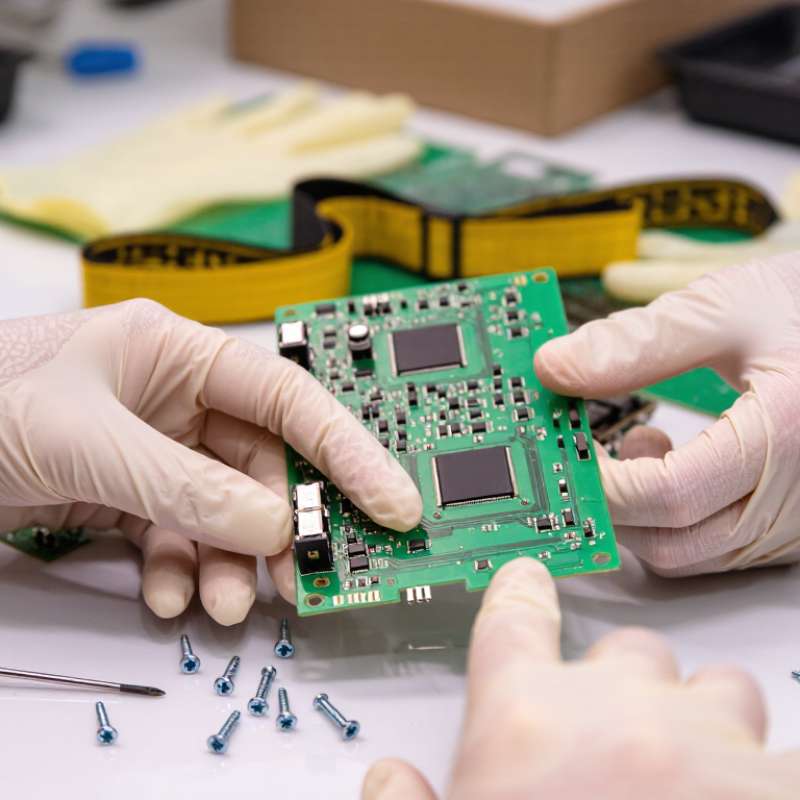
ESD latex gloves are hand coverings designed to control static electricity around sensitive electronic parts. They combine elastic latex with conductive or dissipative fibers, coatings, or surface treatments. Unlike ordinary latex gloves, they help reduce charge buildup on the wearer and lower the risk of a sudden electrostatic discharge. That discharge may damage circuit boards, sensors, displays, or miniature connectors without leaving visible marks.
Their industrial purpose is practical: protect products during assembly, inspection, testing, and packaging. A technician handling a circuit board should still use a verified grounding system, such as a wrist strap, conductive footwear, or a grounded workbench. Gloves alone do not ground the body. Check surface resistance, material cleanliness, powder-free construction, cuff contact, and finger sensitivity before choosing a pair. The required resistance range should match the site’s ESD control program and recognized technical standards.
Fit matters more than many buyers expect. Loose fingertips can catch components, while tight latex may cause fatigue during an eight-hour shift. Choose the right size. Check supplier test data, then inspect gloves after repeated use. Sweat, dust, stretching, and cleaning can change performance. I have seen teams trust a label without testing the actual glove in their workspace. That is a weak assumption. ESD gloves also offer limited chemical and mechanical protection, so they should not replace task-specific protective equipment.
Choosing an ESD latex glove starts with the device’s sensitivity, not the glove’s color or coating. Check the site’s ESD control plan and the required resistance range. ANSI/ESD S541 classifies materials below 1.0 × 10⁴ ohms as conductive, while 1.0 × 10⁴ to below 1.0 × 10¹¹ ohms is dissipative. For many electronics tasks, dissipative performance is safer than rapid conductivity. It moves charge gradually. That matters near exposed circuit boards.
The ESD Association’s ANSI/ESD SP15.1 provides a test method for gloves and finger cots. Ask for test data measured on the complete glove, not only the latex compound. Test conditions should include humidity, applied voltage, and glove size. IEC 61340-5-1 also stresses a controlled grounding system, because gloves cannot remove charge without a reliable path to ground. A low resistance number can look reassuring, but it may be the wrong target. A common purchasing mistake is testing a dry glove on a clean bench, then using it with an insulating sleeve and poor grounding. Repeat testing after realistic wear, stretching, and contact with tools. Latex formulation changes resistance. So does sweat. Select the protection level from measured hand-to-ground performance, then confirm it during routine audits. A certificate alone is not enough.
When choosing ESD latex gloves for industrial work, inspect latex quality before checking price. High-quality latex should feel elastic, smooth, and consistent across the fingertips. Thin spots can tear during tool handling. Look for low-protein, powder-free material when skin sensitivity or clean production matters. I once treated a comfortable glove as a safe glove. That was a poor shortcut.
Fit directly affects ESD performance and operator control. The glove should follow the fingers without folding at the palm or restricting movement. Excess material may catch on small components and create contamination risks.
A loose cuff can also weaken contact with a grounding system. Check the glove’s electrostatic test data, such as vertical resistance results under EN 16350, rather than trusting an “ESD” label alone. Test the complete glove, wearer, footwear, and workstation together.
Chemical resistance requires more careful judgment. Latex handles some diluted water-based chemicals, but it is not suitable for every solvent, oil, or aggressive cleaner. Review permeation and degradation data for the exact chemical, concentration, temperature, and exposure time. Chemical compatibility charts are useful, but real work conditions can differ. Replace gloves after swelling, stickiness, cracking, or unusual odor appears. My own evaluation would include a short trial with the actual cleaning process, because laboratory ratings do not always reflect hurried handling on a busy production floor.
How to Choose ESD Latex Gloves for Industrial Use?
Match Glove Features to Workplace Tasks
Choose the glove around the task, not only its ESD label. For circuit assembly, use thin, powder-free latex with controlled surface resistance and strong tactile sensitivity. ANSI/ESD STM11.11 provides a recognized method for measuring surface resistance. Verify results under actual humidity and temperature conditions. A glove can pass testing and still feel wrong.
For soldering or component inspection, prioritize finger flexibility and a secure grip. Textured fingertips help when handling tiny parts. For oily machinery, check chemical compatibility and abrasion resistance before selecting latex. The U.S. Bureau of Labor Statistics reported 888,100 private-industry cases involving days away, job transfer, or restriction in its 2023 Survey of Occupational Injuries and Illnesses. That figure covers many injury types, but it reinforces a practical point: ESD control cannot replace task-specific protection. If workers handle solvents, review safety data sheets and consider an alternative material. Latex sensitivity also requires attention, especially in shared workplaces. Measure resistance after repeated use, not only from a new pair. I have seen gloves become less reliable after sweat, dust, and stretching. Small details matter. Choose the lowest thickness that still protects the hands, maintains grip, and meets your facility’s ESD program requirements under ANSI/ESD S20.20.
| Workplace Task | Recommended Glove Features | Typical Material and Construction | Surface Resistance Guidance | Grip and Dexterity | Suitable Workplace Conditions | Key Selection Checks | Important Limitations |
|---|---|---|---|---|---|---|---|
| PCB Assembly and Hand Soldering | Lightweight ESD-dissipative glove, close fit, low-lint liner, and good fingertip sensitivity. | Thin knitted nylon or nylon-blend liner with a dissipative latex coating on the palm and fingertips. | Choose a product tested within the facility’s approved ESD control range; many dissipative gloves are specified around 106–109 ohms, depending on the test method. | Smooth or micro-textured fingertips support component placement and soldering-tool handling. | ESD-protected workstations, electronics assembly areas, and controlled indoor environments. | Confirm compatibility with the grounding system, cuff coverage, surface resistance, and test conditions used by the ESD program. | Latex may cause allergic reactions for some users and does not protect against heat, solder splashes, or sharp edges by itself. |
| Small Electronic Component Inspection | Very thin palm coating, seamless liner, low particulate shedding, and high tactile sensitivity. | Fine-gauge knitted liner with a light latex palm or fingertip coating; seamless construction reduces pressure points. | Use only gloves with documented ESD test results rather than relying on the word “anti-static” alone. | Excellent finger flexion and minimal coating thickness are more important than maximum abrasion resistance. | Inspection benches, optical inspection stations, and component sorting areas. | Check finger movement, coating uniformity, cuff fit, and whether the glove leaves residue on sensitive surfaces. | Thin gloves wear faster and offer limited protection from cuts, punctures, chemicals, and elevated temperatures. |
| Automotive Electronics Assembly | ESD dissipation combined with moderate abrasion resistance, secure grip, and a durable elastic cuff. | Knitted synthetic liner with a medium-weight textured latex coating on the palm and fingertips. | Verify resistance after flexing, washing, or environmental conditioning if the gloves will be reused. | Textured latex improves grip on connectors, housings, and small tools while retaining suitable dexterity. | Vehicle electronics lines, connector assembly, cable handling, and general production stations. | Match coating durability to the expected handling cycle and ensure the cuff does not interfere with wrist grounding. | Grip coatings can reduce tactile sensitivity and may collect dust if used in poorly controlled areas. |
| Precision Mechanical Assembly Near Electronics | ESD-controlled glove with moderate abrasion resistance, reinforced fingertips, and a textured palm. | Medium-gauge liner with partial or full latex coating; reinforced areas may improve service life. | Resistance must be measured on the complete glove, because liner, coating, moisture, and contamination can affect results. | Balanced dexterity and grip are appropriate for screws, fasteners, brackets, and small assemblies. | Mixed mechanical-electronic production cells and tool-assisted assembly stations. | Assess abrasion rating, seam comfort, tool compatibility, and whether the glove interferes with touch controls. | ESD gloves are not a substitute for cut-resistant gloves when blades, sharp sheet metal, or exposed edges are present. |
| Cleanroom-Compatible Electronics Handling | Low-lint construction, cleanroom packaging, controlled particulate release, and documented ESD performance. | Clean-processed synthetic liner with a smooth, thin latex coating; cuff design should support gowning procedures. | Use measured resistance data from the intended humidity range because very dry conditions can change electrostatic behavior. | Smooth surfaces reduce snagging and particle retention, while a close fit supports precise handling. | Controlled environments where particle generation and electrostatic discharge are both managed. | Confirm cleanliness classification, packaging method, extractables or residue requirements, and compatibility with facility procedures. | Not every ESD latex glove is cleanroom suitable; standard industrial gloves may introduce particles or residues. |
| Cable, Wire, and Connector Handling | Reliable grip, flexible fingers, ESD dissipation, and a coating that resists light abrasion. | Knitted liner with textured latex palm and fingertip coating; a breathable back can improve comfort. | Check electrical performance on both dry and conditioned samples where required by the site’s qualification process. | Textured fingertips help prevent connector slips and improve control when routing or securing wires. | Harness assembly, cable routing, connector installation, and electronics repair areas. | Evaluate grip on the actual cable insulation, connector material, and tools used on the line. | Latex coatings can degrade when exposed to certain oils, solvents, or chemicals; consult chemical compatibility data. |
| ESD-Sensitive Equipment Maintenance | Comfortable long-wear design, stable electrical performance, good dexterity, and resistance to light workshop abrasion. | Medium-light knitted liner with a flexible latex coating and elastic wrist cuff. | Use within a complete ESD control system that may include grounded work surfaces, footwear, wrist straps, and humidity control. | Flexible construction supports access to screws, connectors, test points, and compact equipment interiors. | Repair benches, service rooms, test laboratories, and maintenance areas handling powered-down equipment. | Confirm whether the glove is intended for use with the facility’s personnel grounding method and maintenance procedures. | Gloves do not eliminate the need to ground personnel or follow equipment lockout and electrical safety rules. |
| General ESD-Safe Warehouse Picking | Durable coating, dependable grip, comfortable cuff, and documented dissipative properties. | Medium-gauge liner with palm and fingertip latex coating; a breathable back may improve extended-wear comfort. | Prioritize stable, documented performance and periodic verification rather than an unverified resistance claim. | Textured palms are useful for cartons, trays, bins, and packaged electronic components. | ESD-controlled storage, kitting, material movement, and component replenishment areas. | Check abrasion resistance, sizing consistency, barcode-scanner compatibility, and ease of replacement. | General-purpose ESD gloves may not provide sufficient protection against heavy impact, sharp edges, or chemical exposure. |
Selection note: ESD performance depends on glove construction, humidity, contamination, contact with grounded personnel and equipment, and the test method used. Validate the selected glove as part of the workplace ESD control program and follow applicable requirements such as IEC 61340-5-1 or ANSI/ESD S20.20 where relevant.
Choosing ESD latex gloves starts with compliance, not color or thickness. IEC 61340-5-1:2016 identifies 35 megohms as the maximum resistance for a personnel grounding system under defined conditions. However, this value does not automatically prove glove performance. Request test records showing surface resistance, charge decay, and compatibility with the facility’s grounding system. ANSI/ESD S20.20 and ESD Association TR53 also stress documented verification. Measure, do not guess.
Durability matters when gloves face sharp trays, solvents, sweat, and repeated stretching. ASTM D3578 specifies performance requirements for applicable latex glove categories, including tensile strength and elongation testing. Check results before and after aging tests. A thin glove may pass a factory test, then fail around the thumb after several shifts. Look closely there. In production areas, inspect pinholes, sticky surfaces, cracking, and loss of elasticity at every shift change. A glove can look clean and still fail electrically.
Maintenance needs equal attention. Record resistance readings after cleaning cycles, not only before distribution. Use the approved cleaning method, because detergents, skin oils, and fabric softeners can alter surface properties. Never assume washing restores ESD performance. Replace gloves when readings drift beyond your controlled limit, even if the material feels usable. This is where purchasing teams often compromise, and the compromise is difficult to defend during an audit. A simple log should include operator, glove batch, test result, cleaning count, and replacement date.
Visit the official SA government portal www.sacoronavirus.co.za to stay informed about latest COVID-19 updates. Dismiss